 Nourmio
 Journal
A little clarity for
everyday meals.
Practical guides to calories, total sugar and food logging.
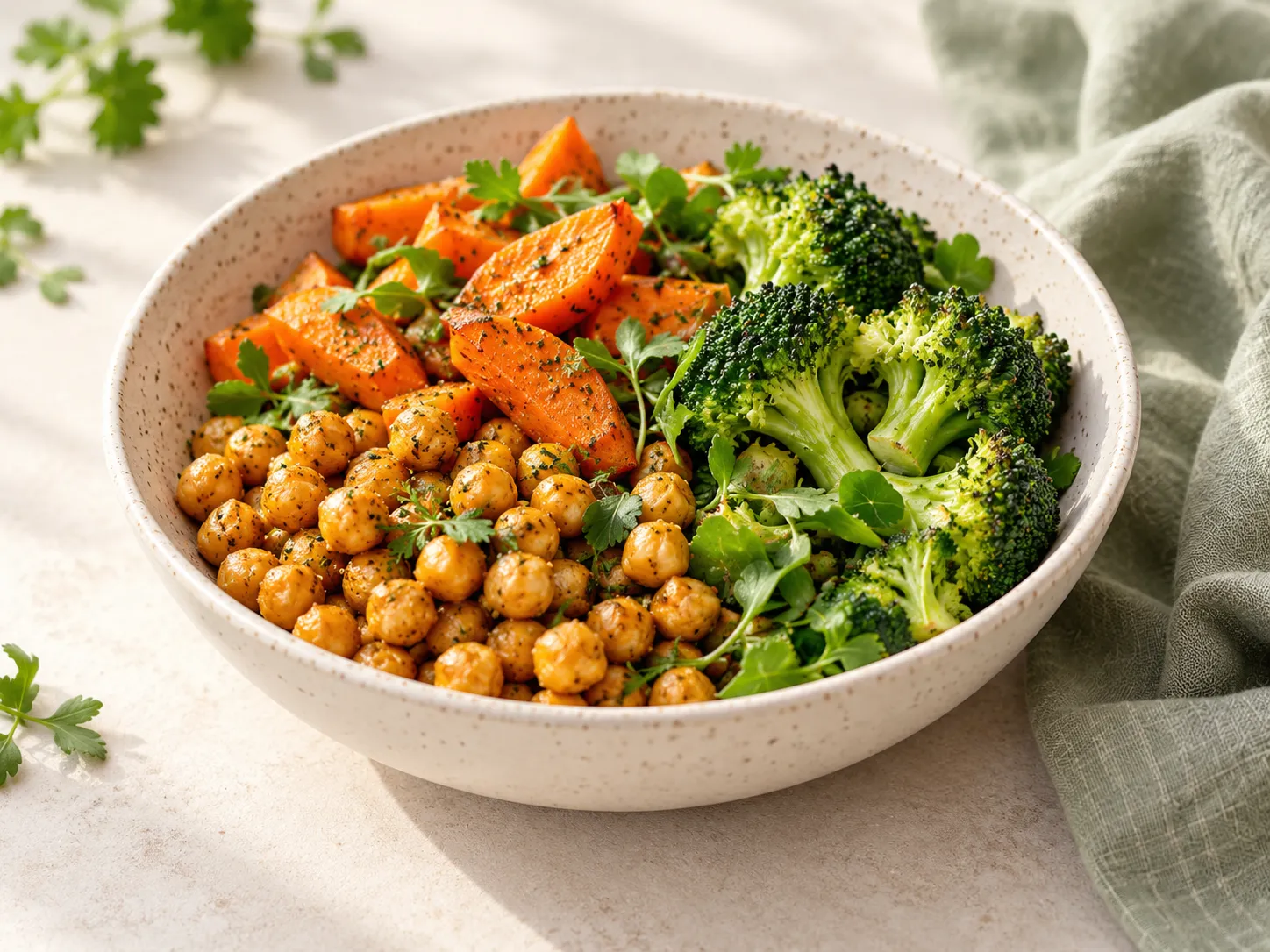
How to count calories in homemade meals
Calculate a homemade recipe and your portion using matched ingredient data, finished food weight and a worked USDA example.
Read the guide
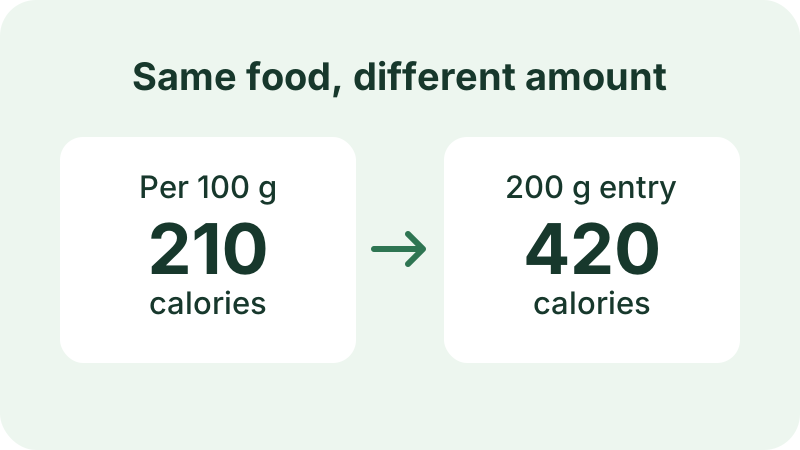
How to check a food photo estimate against the package label
Compare a photo estimate with the label on the same basis. Three recorded Nourmio examples show what to check before logging calories and sugar.
Read the guide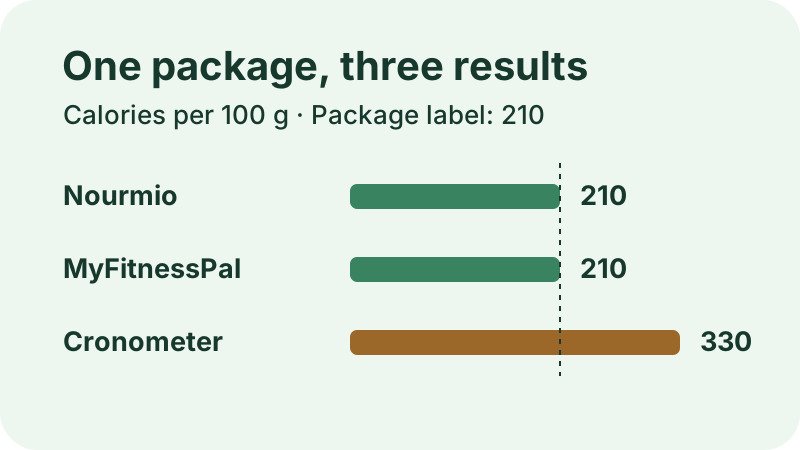
One food label in Nourmio, MyFitnessPal, and Cronometer
See how three iPhone food diaries handled one lemon-ginger product, and use the checklist to verify your own entry before saving.
Read the guide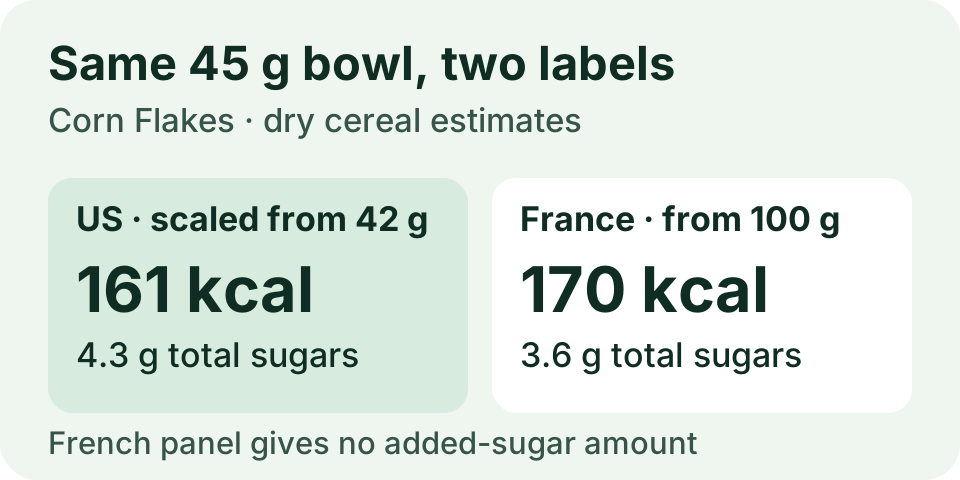
How to compare a US Nutrition Facts label with an EU label
Use the same portion weight to compare US and EU nutrition labels. See how to read calories, total sugars and missing added-sugar values.
Read the guide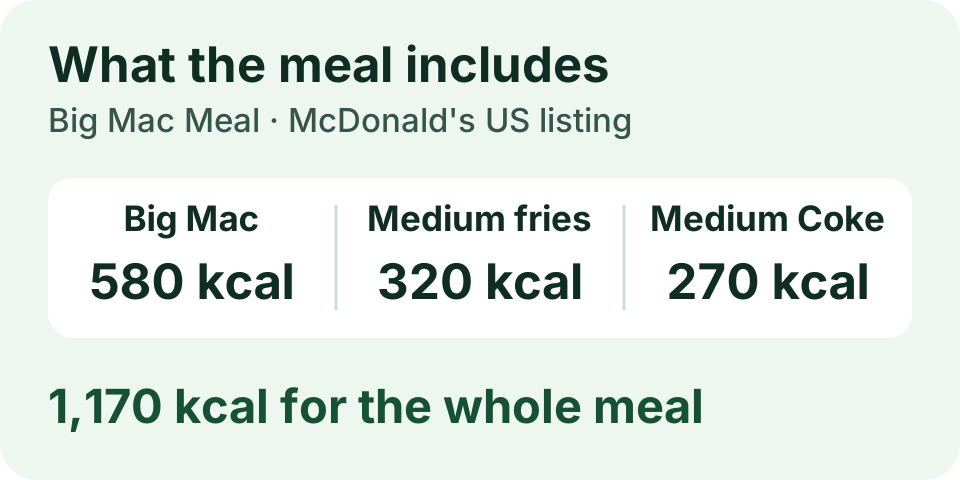
Do restaurant combo calories include the side, sauce and drink?
Find out what a restaurant combo total covers, then count a changed order or separate sauce once. Includes worked examples from two US chains.
Read the guide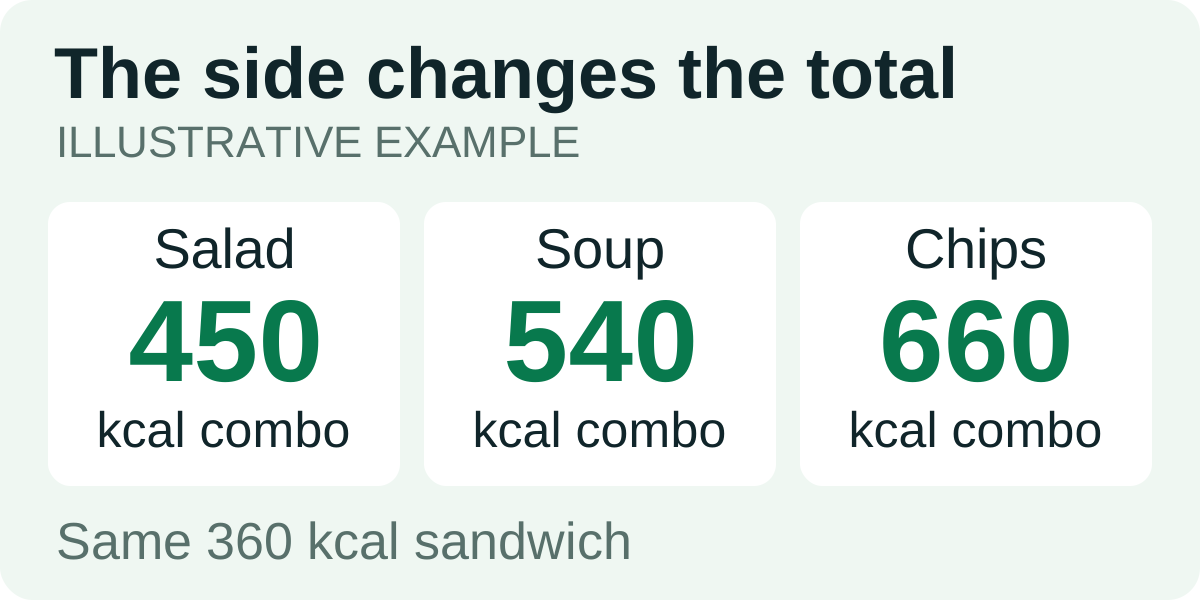
What does a calorie range on a restaurant menu mean?
Read the low and high ends of a menu calorie range, identify what changes the number, and log the combination you ordered.
Read the guide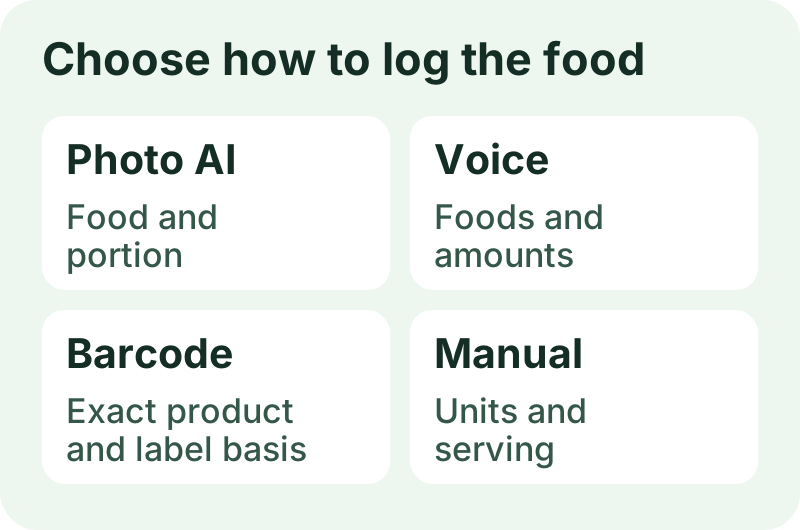
Photo, voice, barcode, or manual entry: choose how to log a meal
Choose how to log a meal in Nourmio, check a voice or photo portion, and convert Nutrition Facts numbers for manual entry.
Read the guide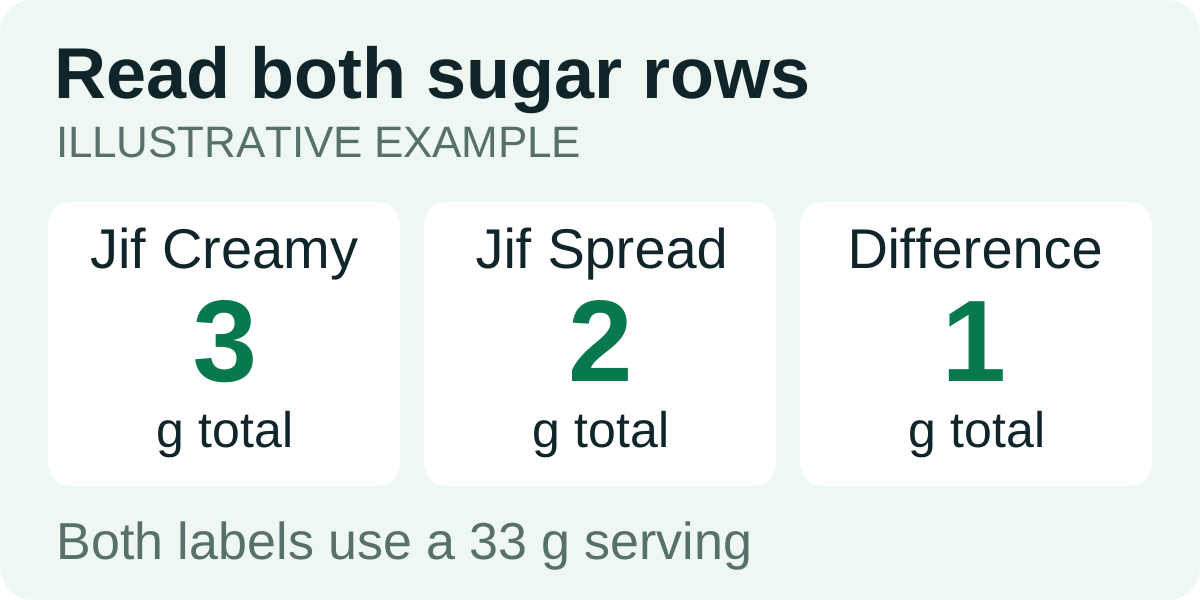
How to compare sugar on peanut butter labels
Read total and added sugars on two Jif peanut butter labels, see how the calorie figures differ, and scale the values to the amount you spread.
Read the guide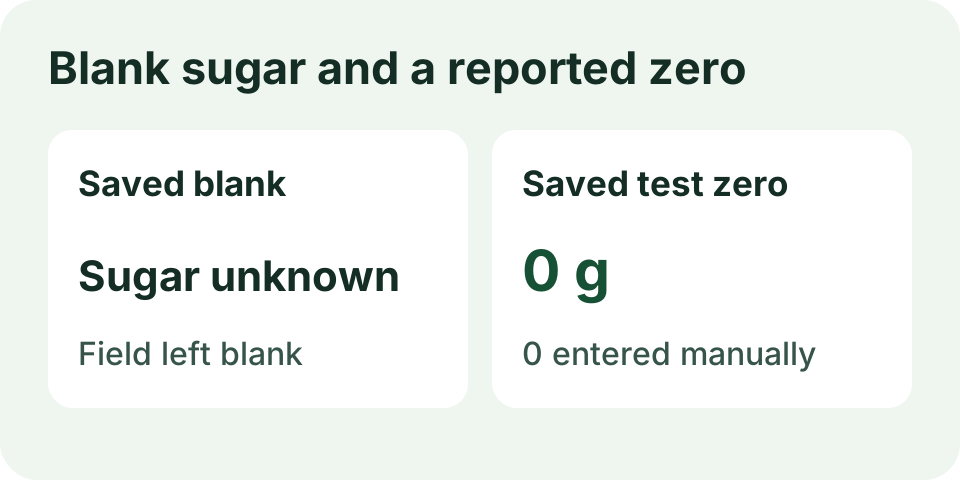
What does a blank sugar value mean in a food diary?
See what Nourmio records when sugar is unknown, how a partial daily total works, and when to enter a label's 0 g.
Read the guide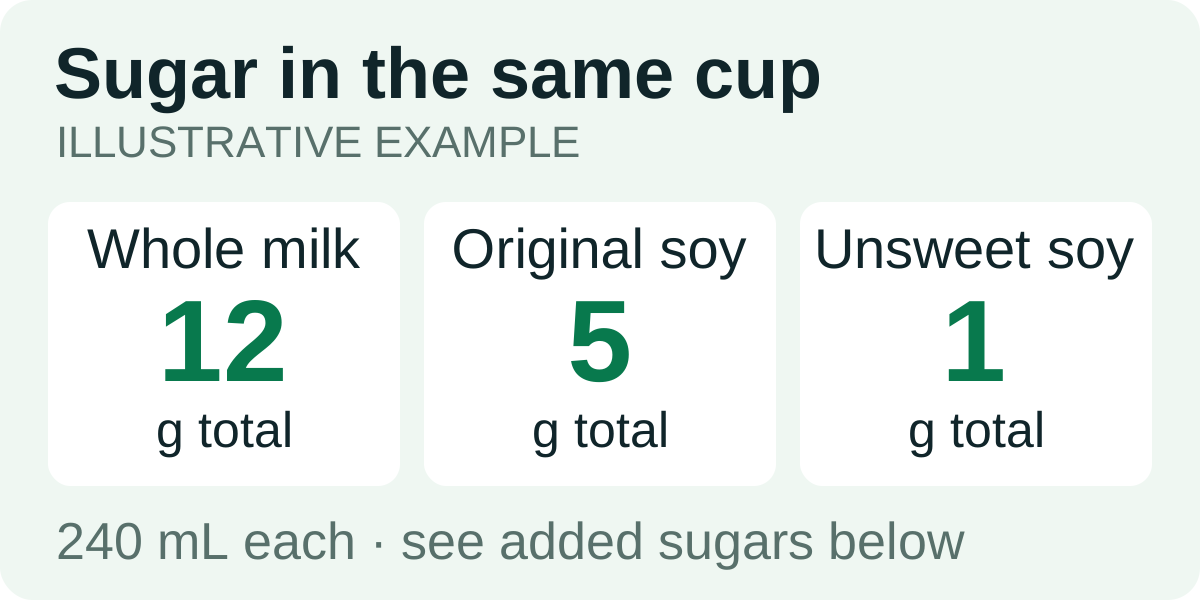
How to compare sugar in milk and plant-based drinks
Compare total and added sugars in whole milk, original soy milk and unsweetened soy milk at the same volume. Calculate the sugar in a smaller pour.
Read the guide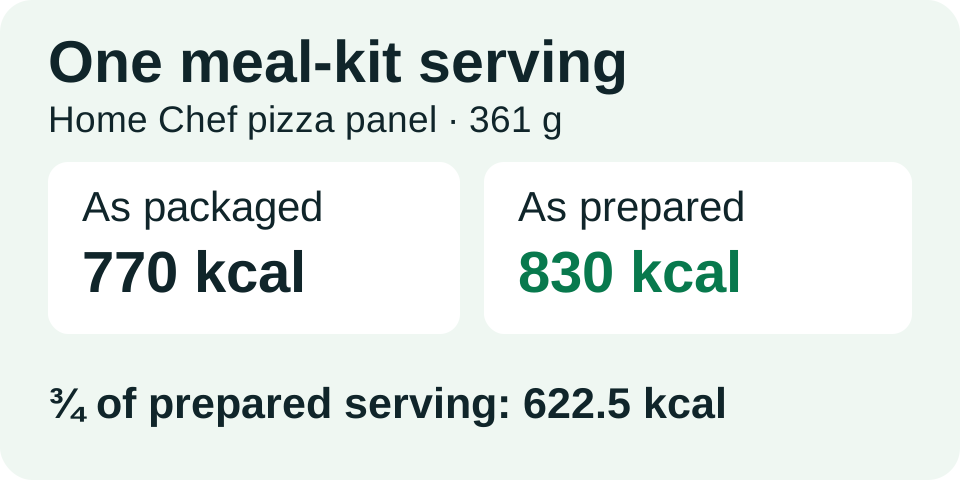
How to log a meal kit when you change the portions
Use a real meal-kit label to compare calories as packaged and as prepared, scale the portion you ate and avoid counting an ingredient twice.
Read the guide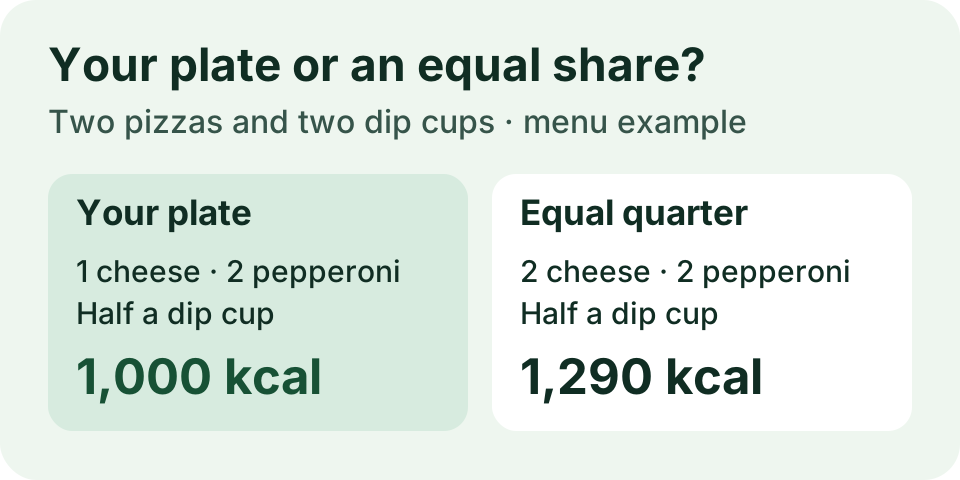
How to log your share of a takeout order
Count the slices and sauce you ate from a shared takeout order. See when an equal split works and how to keep an unknown portion separate.
Read the guide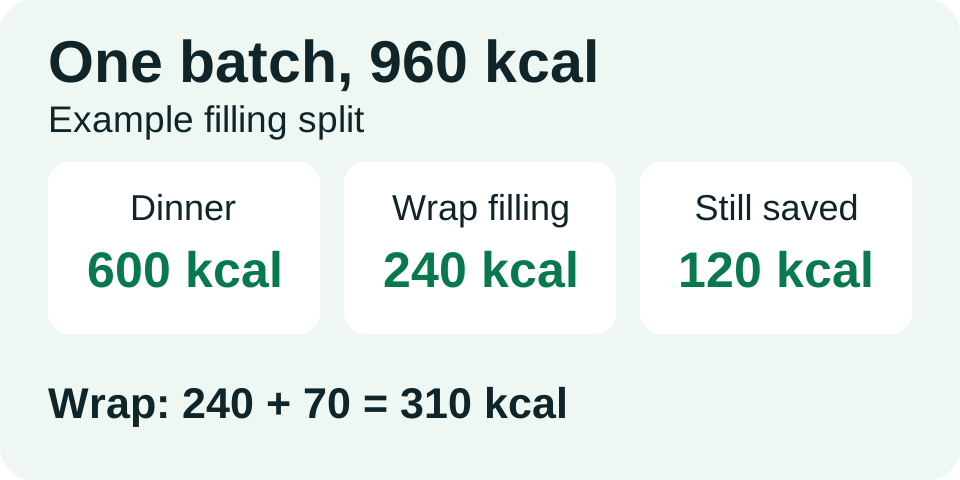
How to log leftovers you turn into a new meal
Carry a saved portion into your next meal, add the new ingredients and check that you counted each part of the original batch once.
Read the guide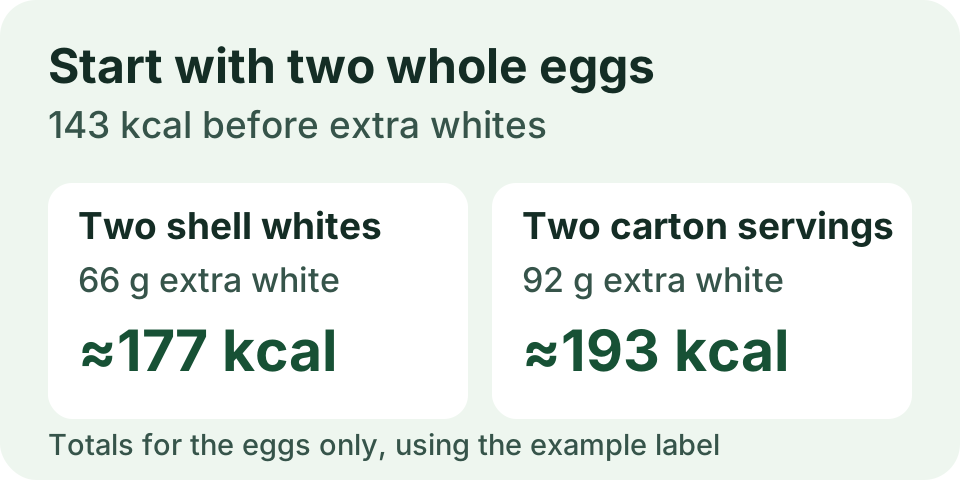
How to log scrambled eggs with extra egg whites
Log whole eggs and extra whites separately. Compare two large shell whites with two carton servings and see why they give different calorie totals.
Read the guide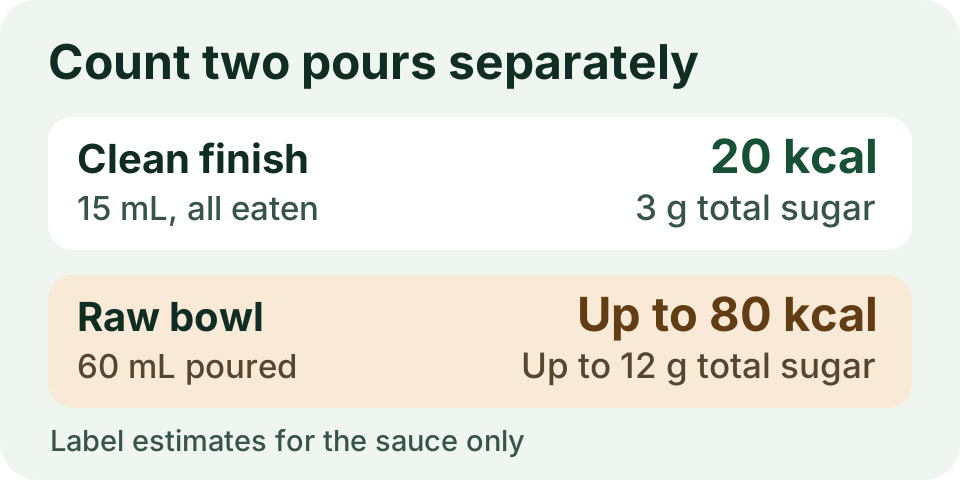
How to count calories in marinade when you discard some
Use the label to count the clean finishing sauce you eat. See what the amount poured into the raw bowl can tell you about calories and total sugar.
Read the guide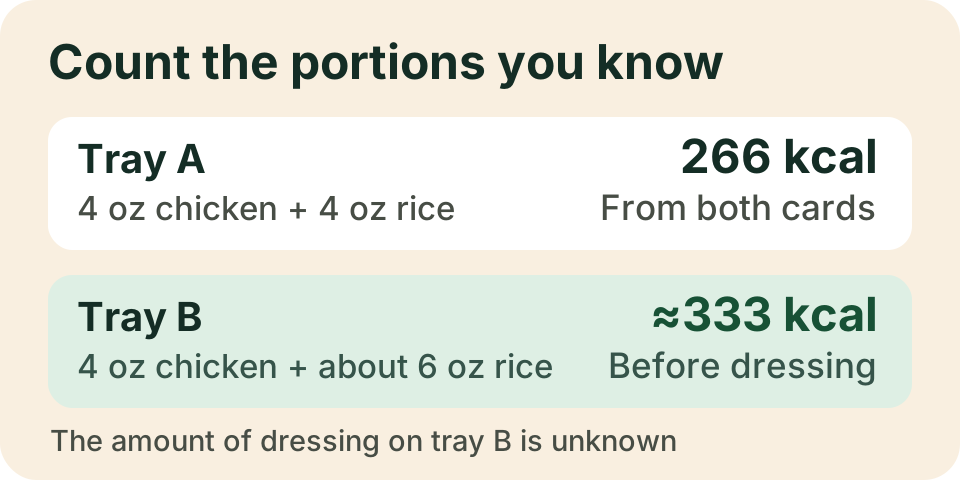
How to log a college dining hall meal with incomplete nutrition data
Match the campus menu's serving to what you took. Two trays use University of Maryland nutrition cards to show how to report a known subtotal.
Read the guide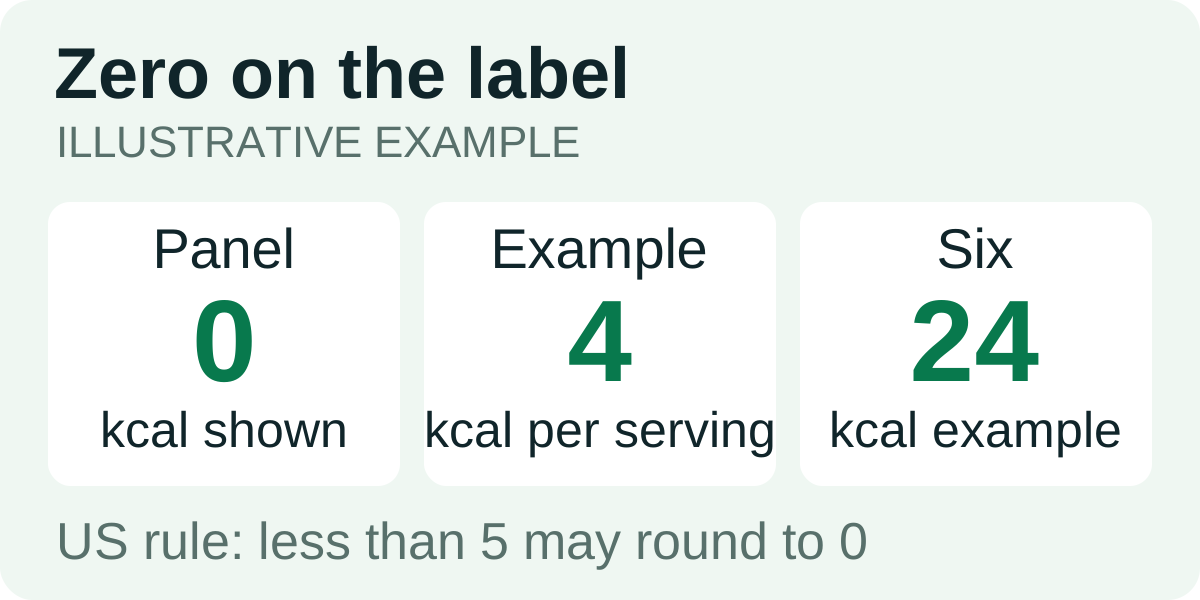
Why a US nutrition label can show zero calories
Understand how the US Nutrition Facts panel can round a small calorie amount to zero and what changes when you use several servings.
Read the guide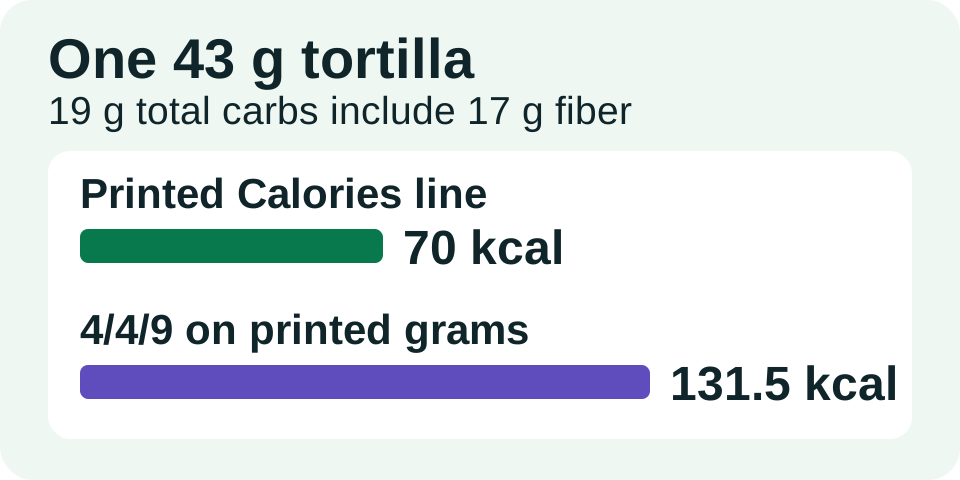
Why don't label calories match the macros?
See why the 4/4/9 calculation can differ from a US Nutrition Facts label, and which calorie number to use for the portion you ate.
Read the guide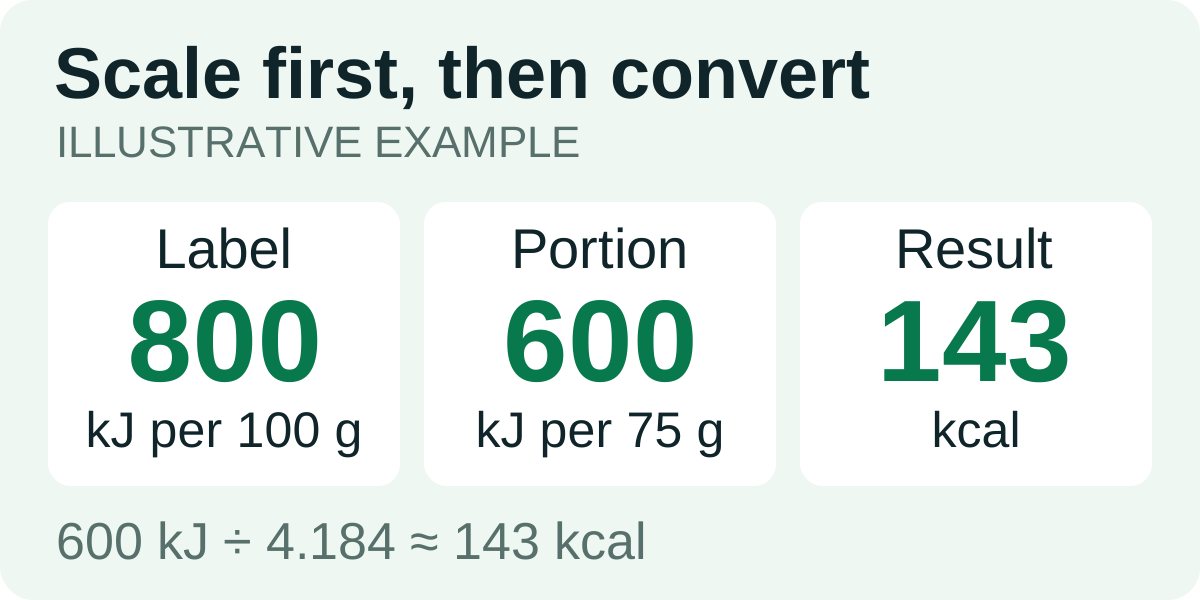
How to convert kilojoules to calories on food labels
Convert food energy from kJ to kcal, scale it to your portion and see which number to use when an imported food label already lists both.
Read the guide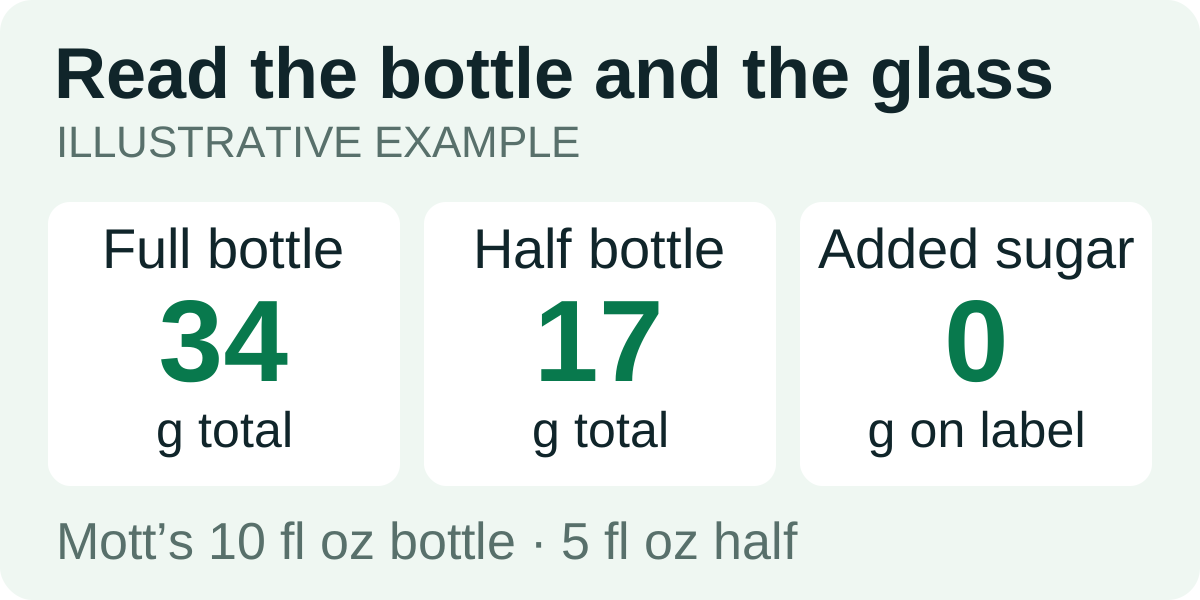
Why no-added-sugar apple juice still contains sugar
See why apple juice from concentrate can show zero added sugar. Use two US label examples to calculate total sugars for the amount you drink.
Read the guide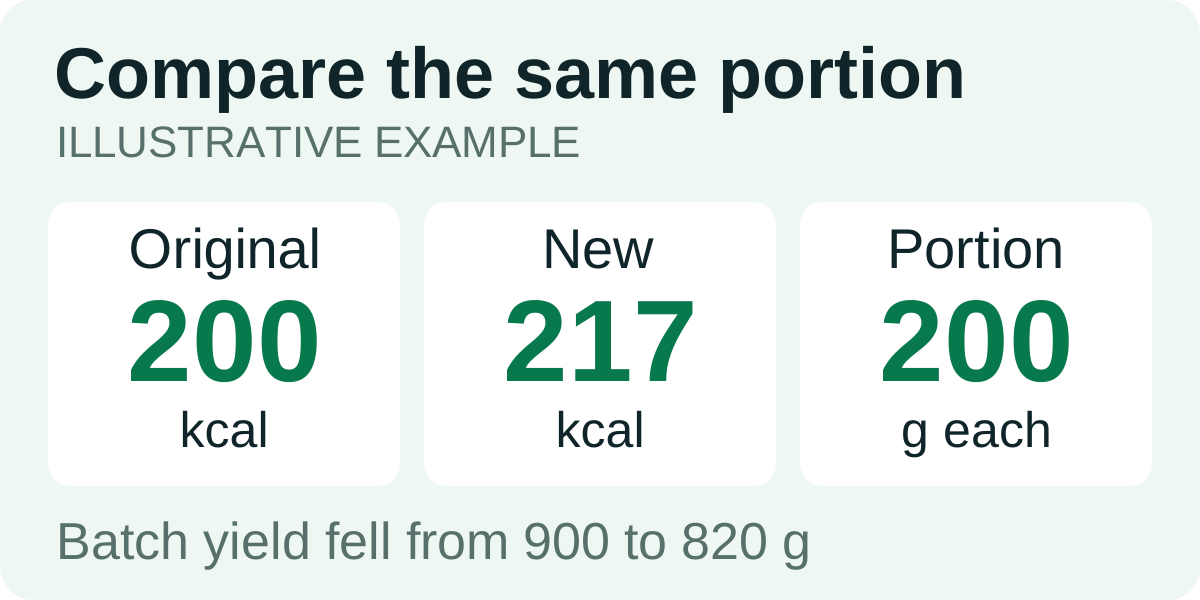
How to recalculate a recipe after changing an ingredient
Replace the ingredient's calories, update the cooked batch weight, and compare calories in the same portion before and after.
Read the guide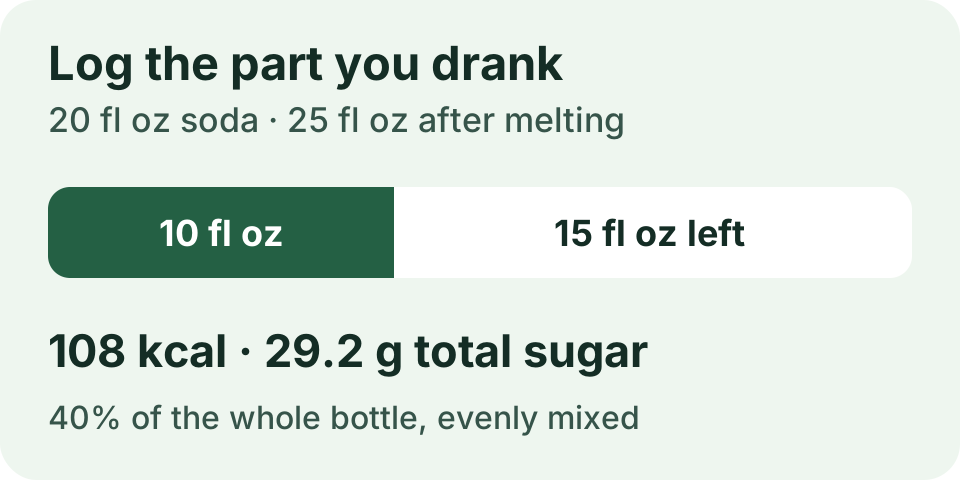
Do fountain drink calories include ice?
Check whether a fountain sign includes ice, then use a worked example to log calories and total sugar for part of a drink after the ice melts.
Read the guide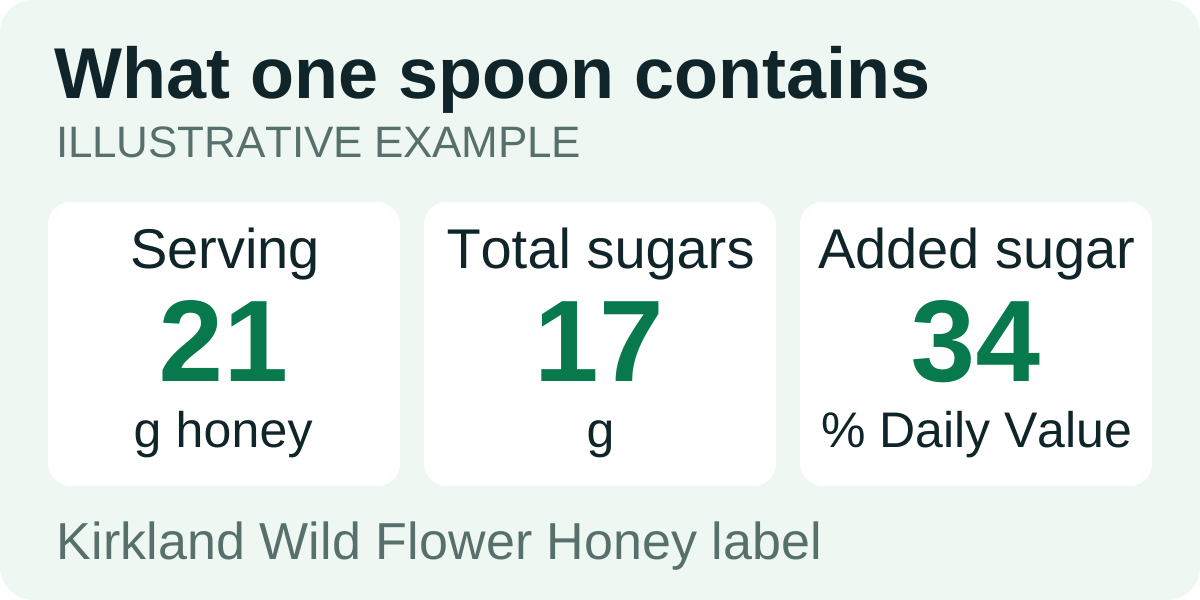
Why honey and maple syrup labels show added sugars
Read Total Sugars and the Added Sugars percent Daily Value on a US honey or maple syrup label, then calculate the sugar in the amount you used.
Read the guide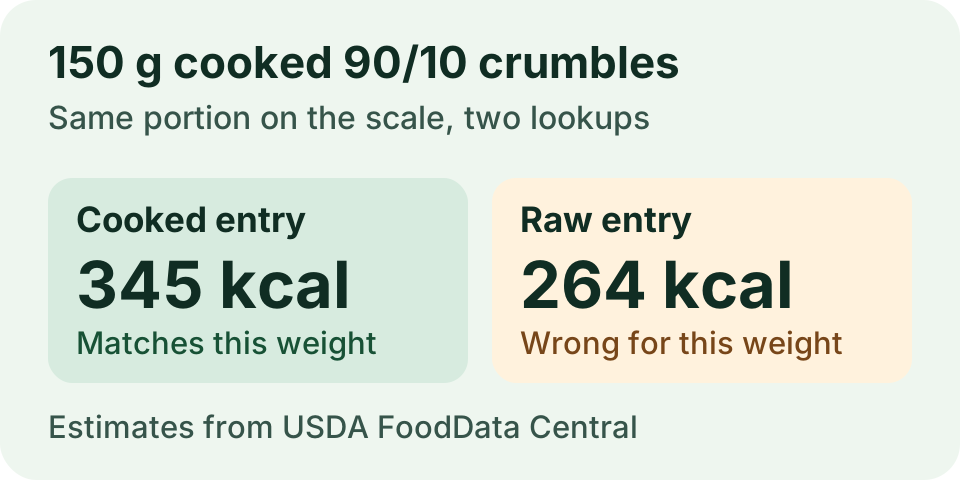
How to log ground beef after cooking and draining
Match a raw or cooked ground beef entry to the weight you measured. Compare USDA estimates for a 150 g portion of drained 90/10 crumbles.
Read the guide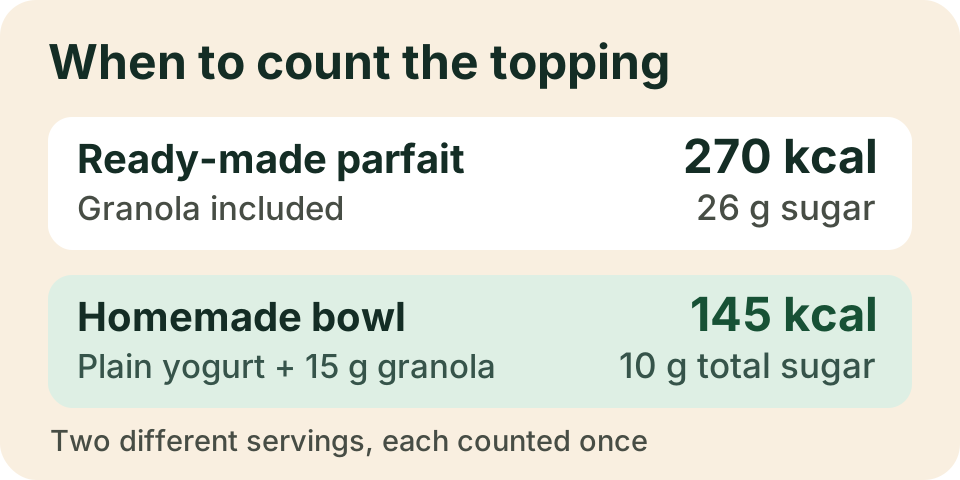
How to log granola as a topping without counting it twice
Check whether the parfait entry includes granola. If you add your own, use its label and the grams you poured to work out calories and total sugar.
Read the guide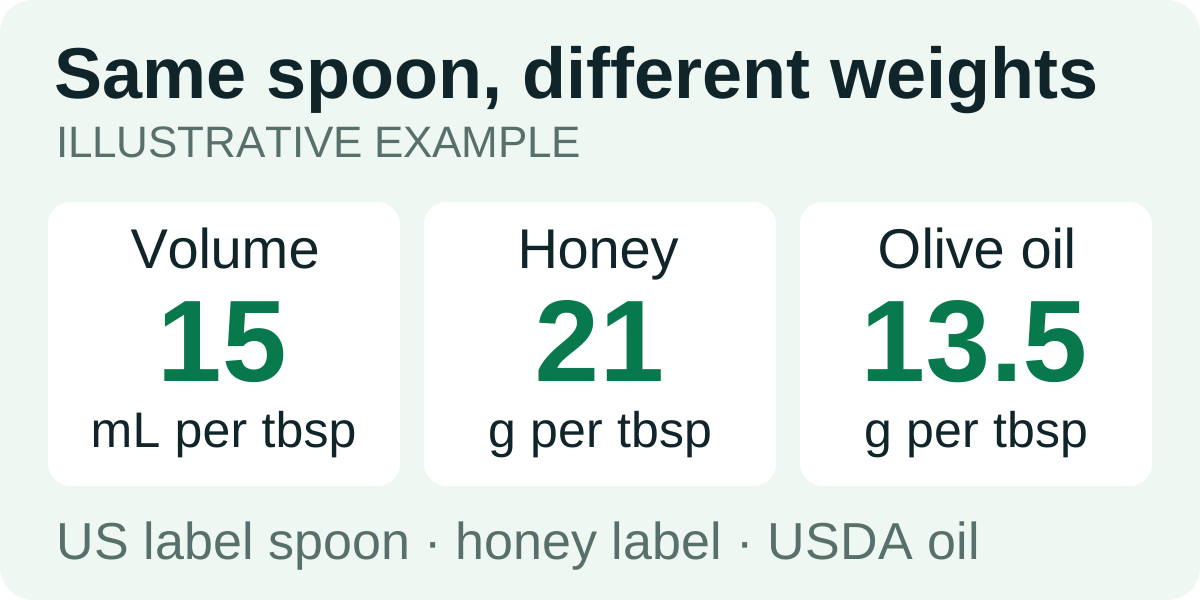
Grams vs. milliliters on a kitchen scale
Find out when to weigh food in grams and when to measure in milliliters. Compare spoonfuls of honey and olive oil and calculate calories from a volume label.
Read the guide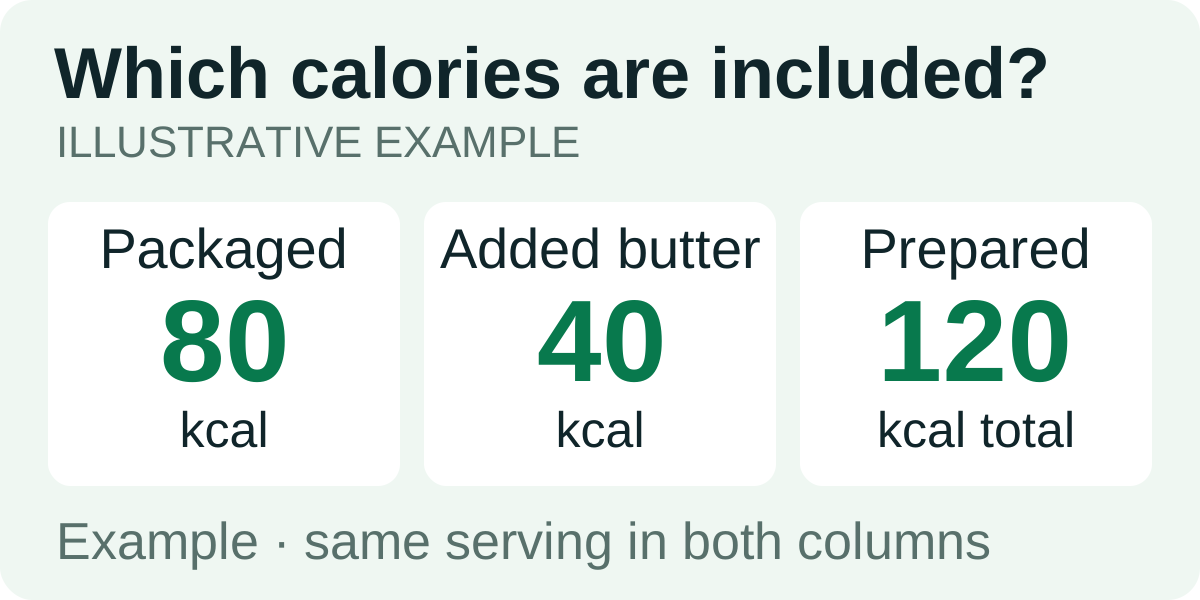
As packaged vs. as prepared on frozen-food labels
Choose the right nutrition column for a frozen meal or side dish. See when to use the package values and how to count butter or oil you add.
Read the guide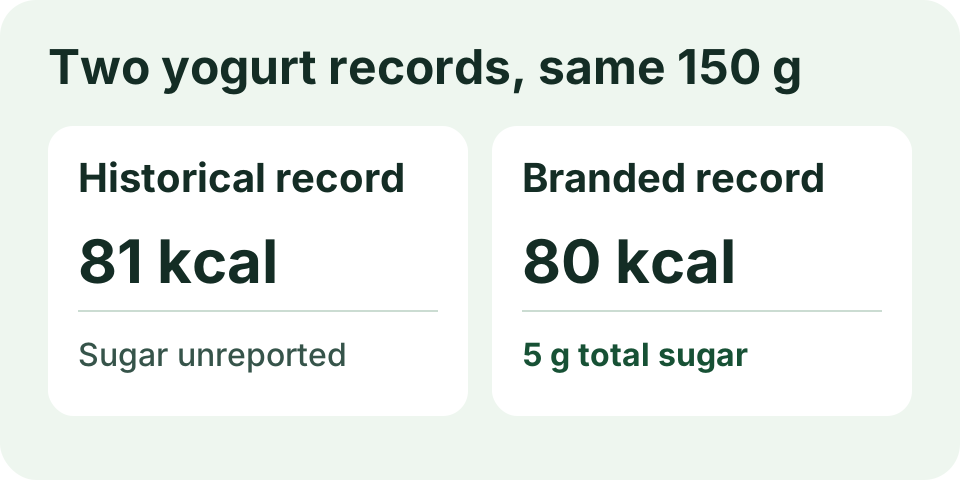
How to choose the right food database entry
Compare two USDA yogurt entries with the package label. Check the product, preparation, and serving size before you log calories or sugar.
Read the guide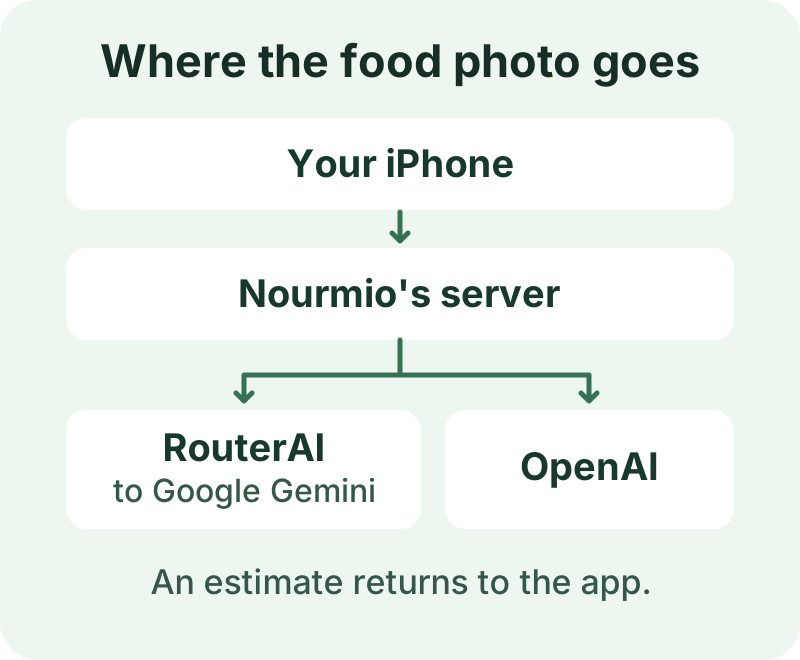
What happens to a food photo when you log it in Nourmio?
See where Nourmio sends a food photo, what the service keeps after recognition, and how to add a diary entry with Cloud AI off.
Read the guide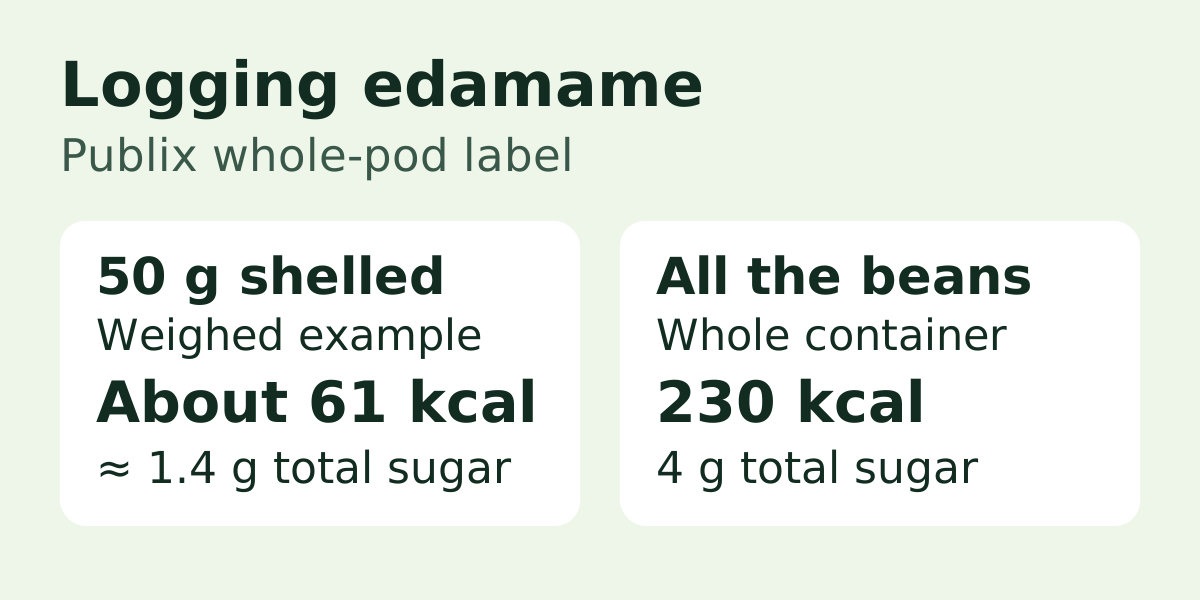
Do edamame calories include the pods?
Use shelled bean weight for an edible-portion label. A real US package shows how to log a weighed share or the whole bag.
Read the guide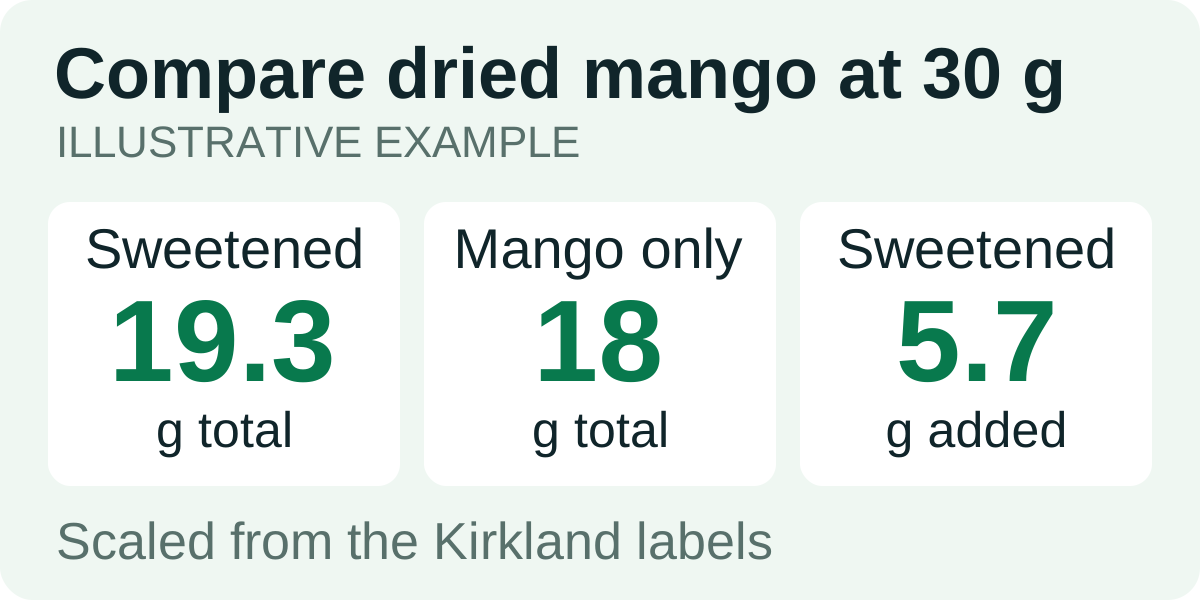
How to compare sugar in sweetened and unsweetened dried fruit
Read the sugar rows on two dried mango labels. Compare sweetened and unsweetened portions at the same weight and calculate the sugar in your handful.
Read the guide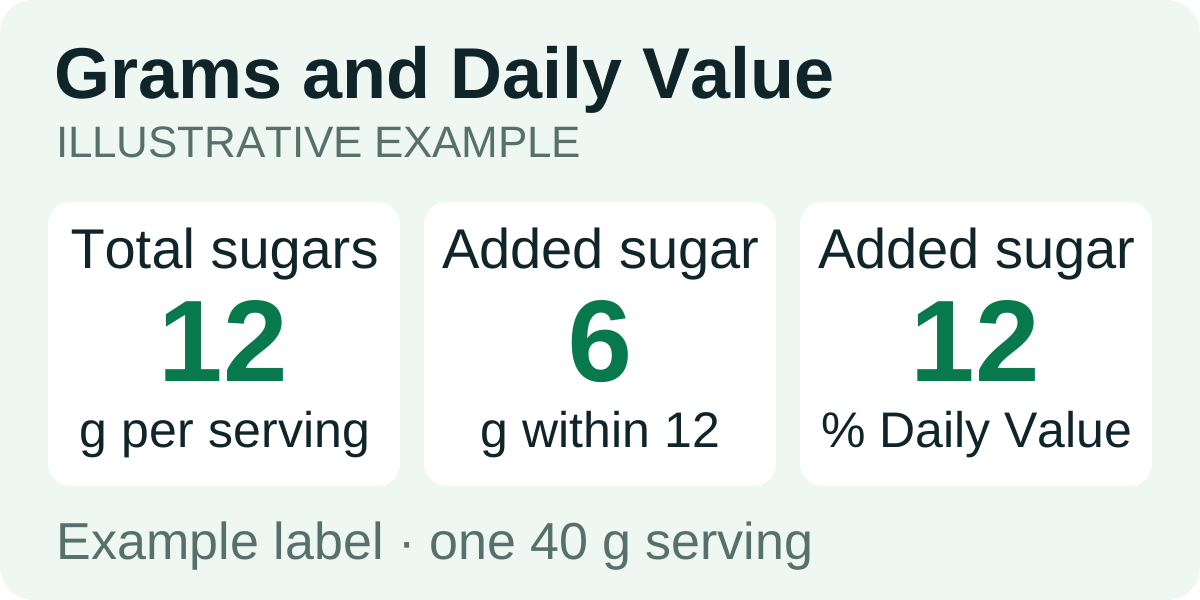
Percent Daily Value vs. grams on a nutrition label
See what grams and percent Daily Value mean on a US Nutrition Facts label. Follow a worked example for total and added sugars when you eat 1.5 servings.
Read the guide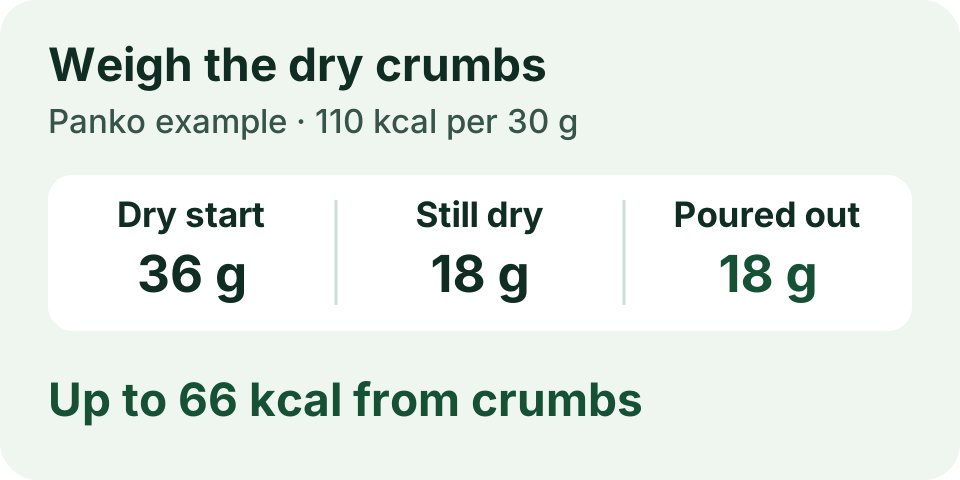
How to count breading calories when some coating is left over
Use the dry breadcrumbs you poured to estimate breading calories. See why flour or panko left in a wet bowl is hard to subtract.
Read the guide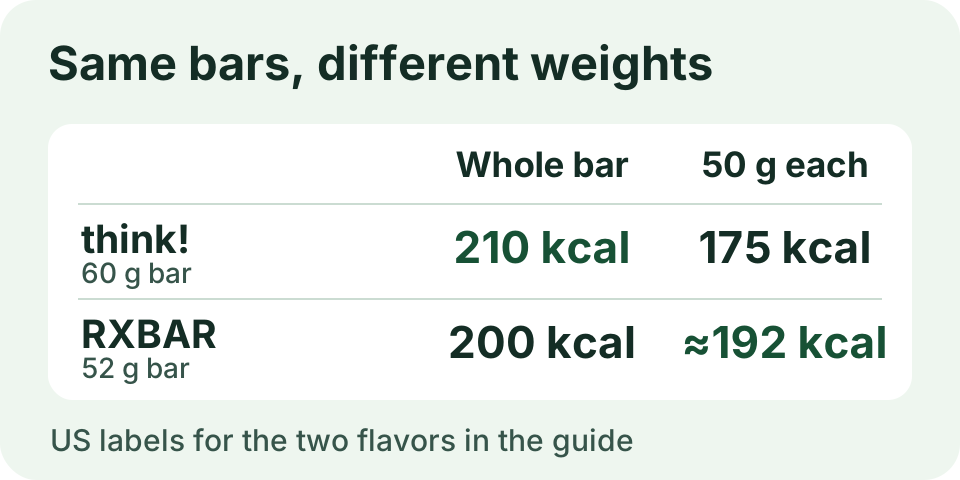
How to compare protein bars with different serving sizes
Compare two US protein bar labels per whole bar and per 50 g. See why the calorie order changes and how to log the portion you ate.
Read the guide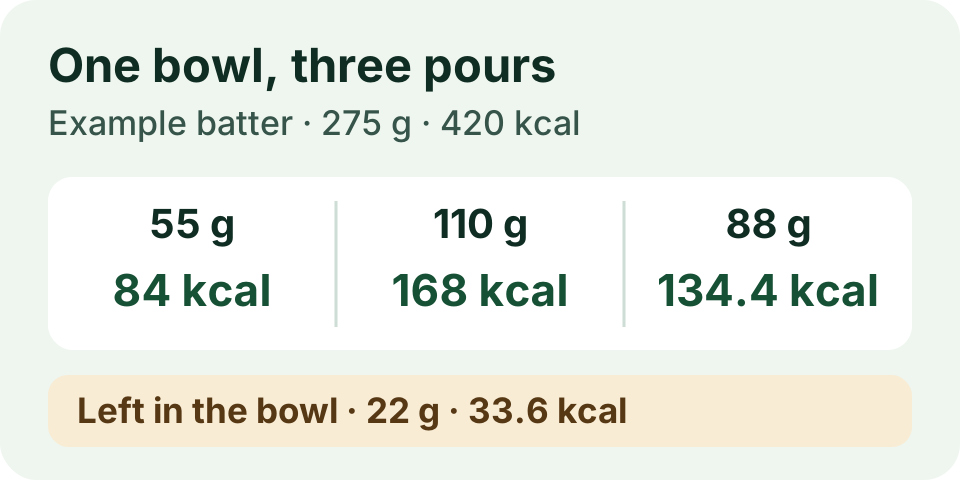
How to calculate calories for pancakes of different sizes
Weigh each pour of pancake batter to estimate calories for different sizes. See how to account for batter left in the bowl and toppings.
Read the guide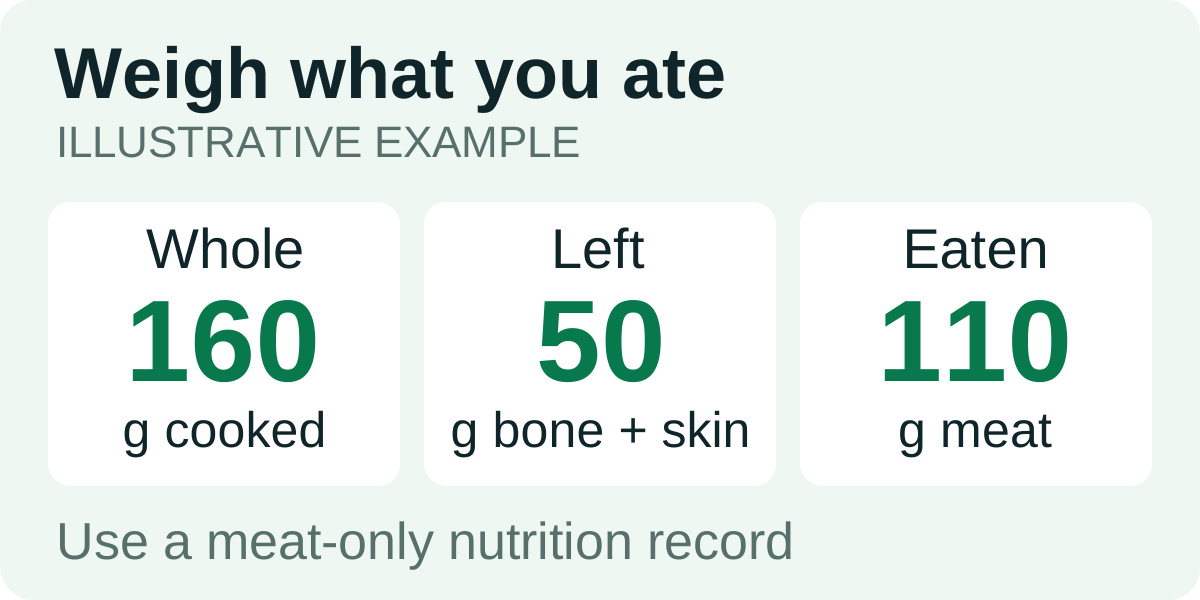
How to log bone-in chicken using edible weight
Estimate the amount of cooked chicken you ate, then pick a nutrition record that matches the cut, preparation, and skin.
Read the guide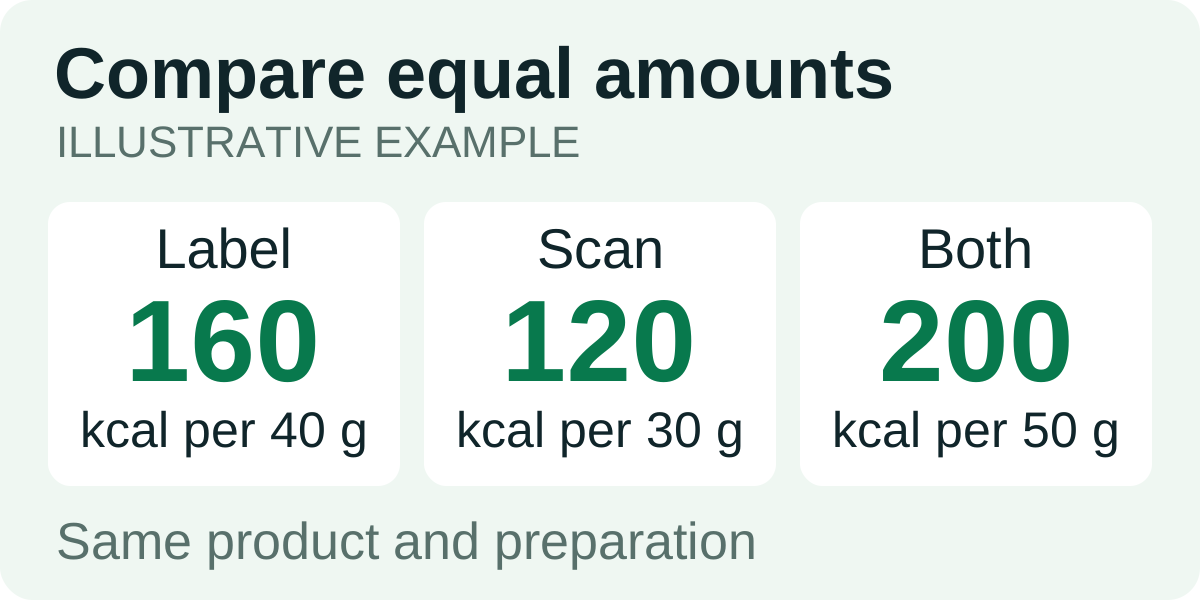
How to check a barcode result against the package label
Match the product, compare calories and total sugar at the same weight, and decide when to use the package values instead.
Read the guide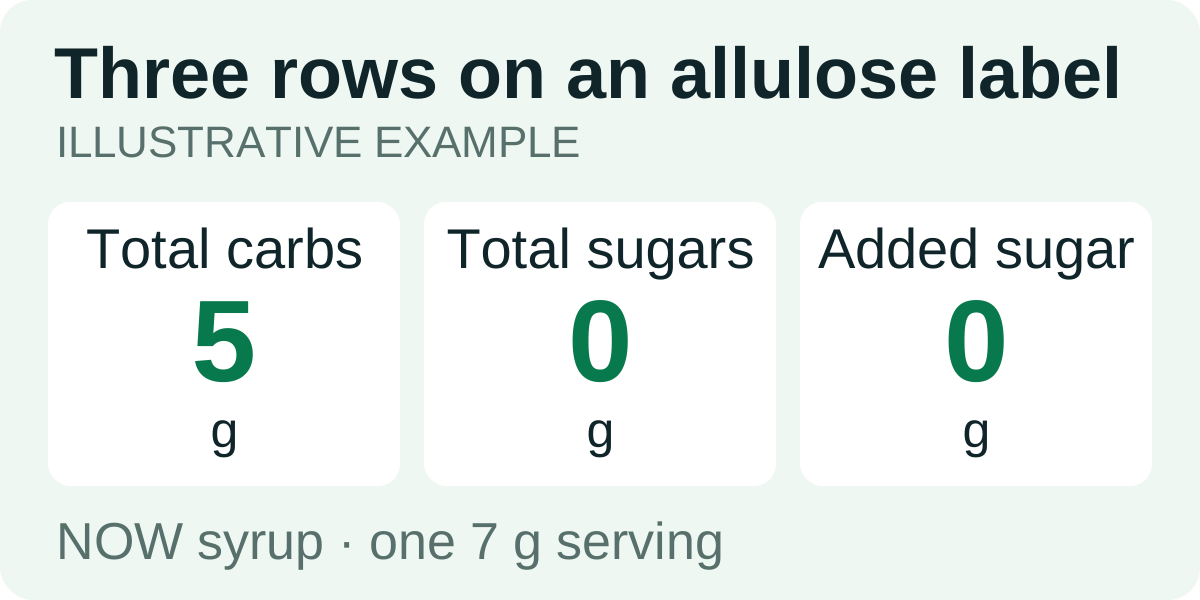
Is allulose a sugar alcohol? How to read the US label
See why allulose can appear in an ingredient list while Total Sugars shows zero. Read a US syrup label and work through the FDA calorie factor.
Read the guide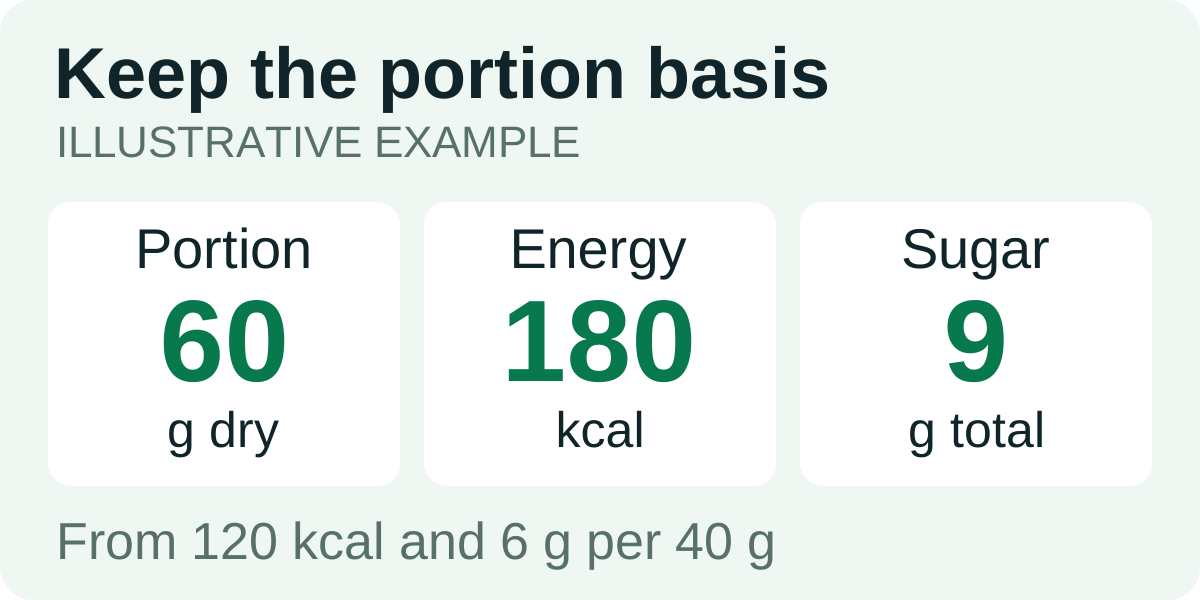
A one-week food diary template with portions and notes
Copy a seven-day food log that keeps portions, calorie and sugar references, and uncertainty together. Includes a filled example and a reusable entry form.
Read the guide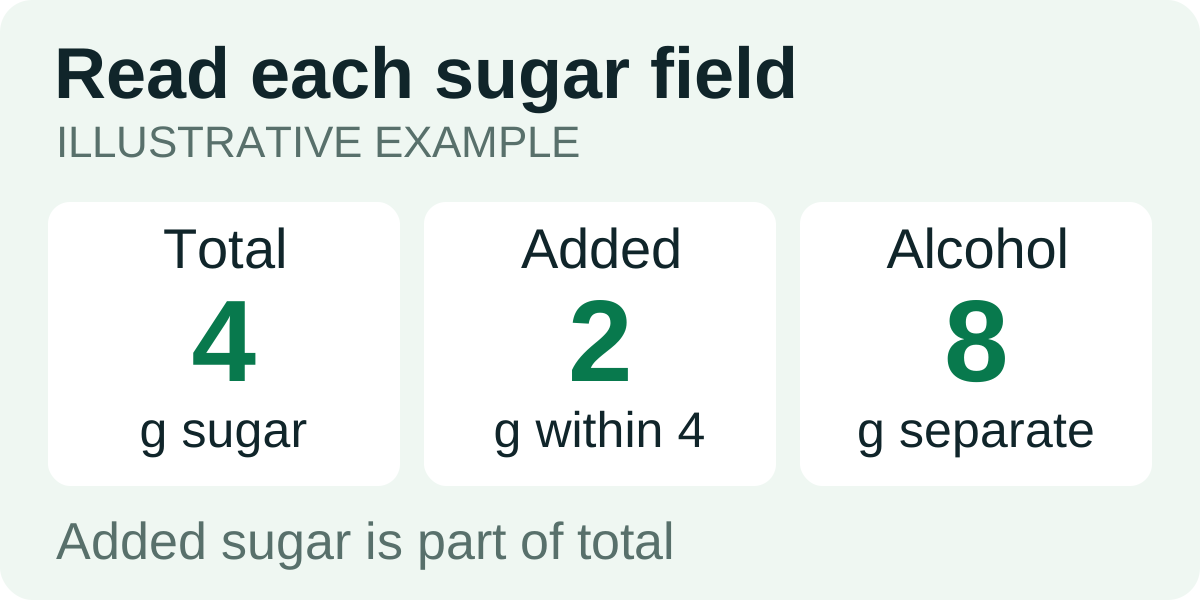
Sugar alcohol vs. added sugar on a Nutrition Facts label
Read Sugar Alcohol, Total Sugars and Includes Added Sugars as different label fields. A worked example shows which values to scale and which not to subtract.
Read the guide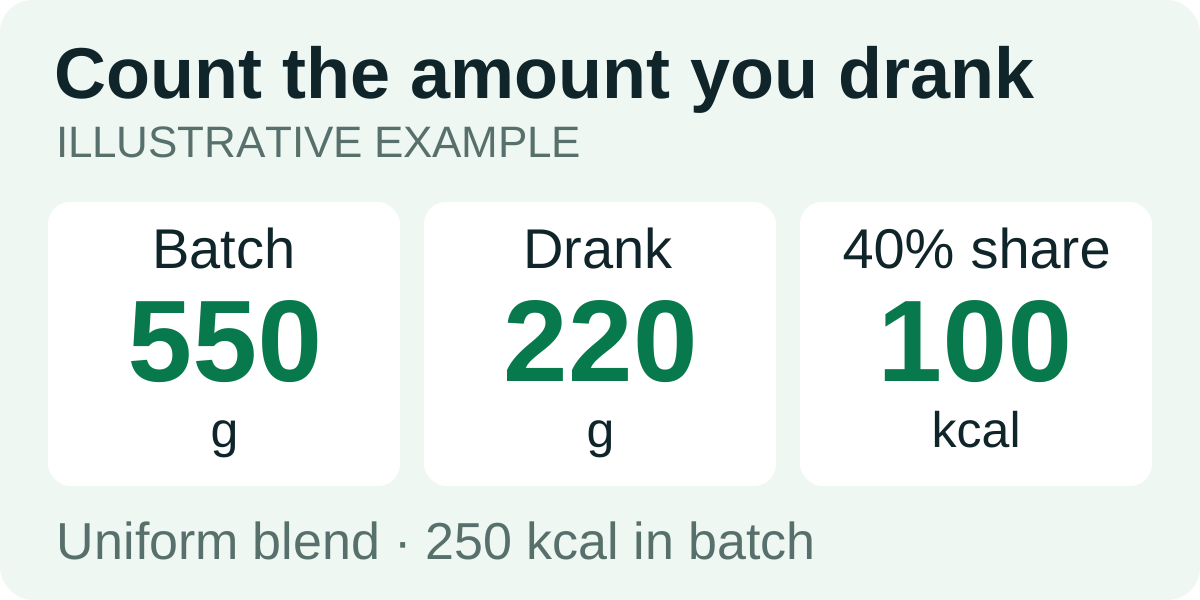
How to log a homemade smoothie you partly drank
Separate the blender batch, the amount poured and the amount left in your glass. A worked example avoids subtracting the same leftovers twice.
Read the guide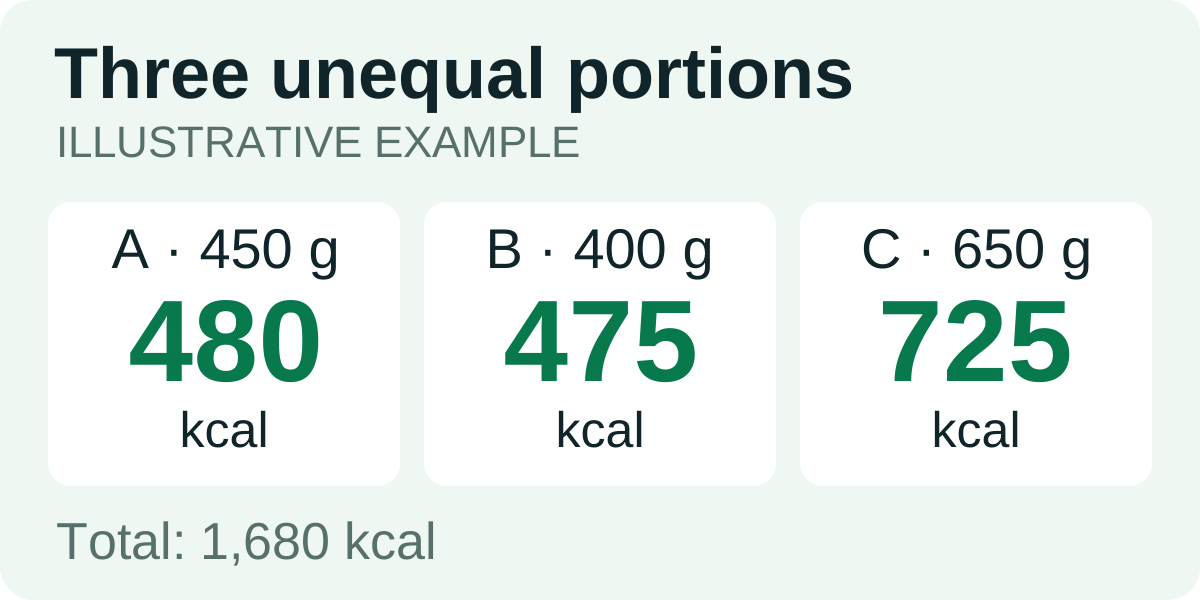
How to calculate meal-prep calories for unequal portions
Calculate separate components before you fill unequal containers. A worked three-box example checks that all food and calories are accounted for.
Read the guide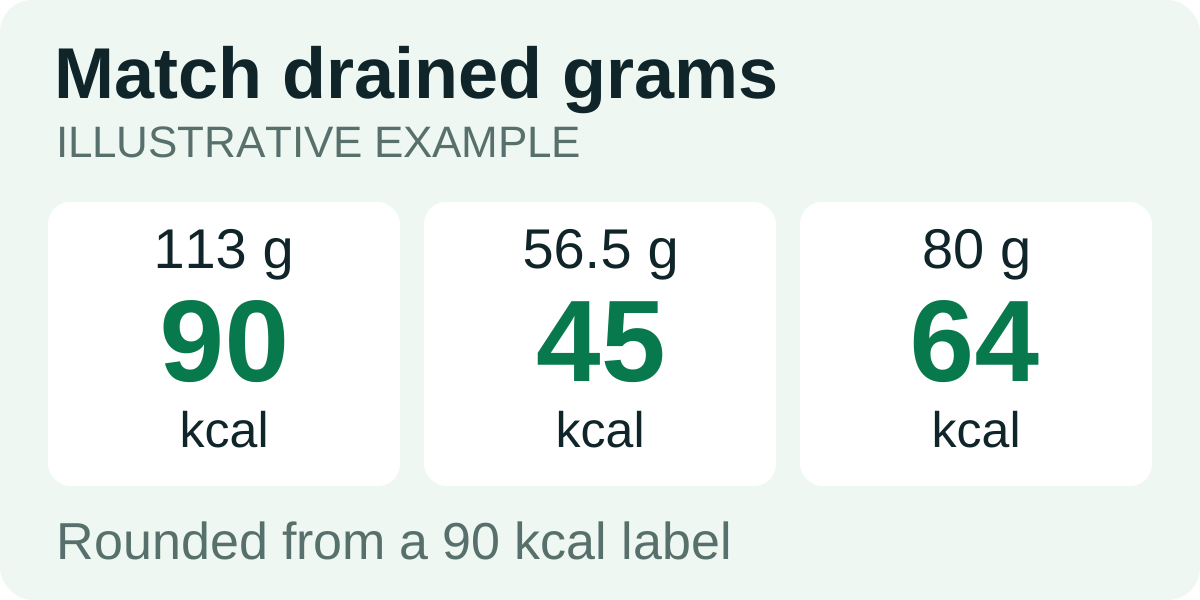
How to log canned food using drained weight
Check whether a canned-food label describes drained solids or the contents as sold. Use a real tuna label to calculate a full or partial serving.
Read the guide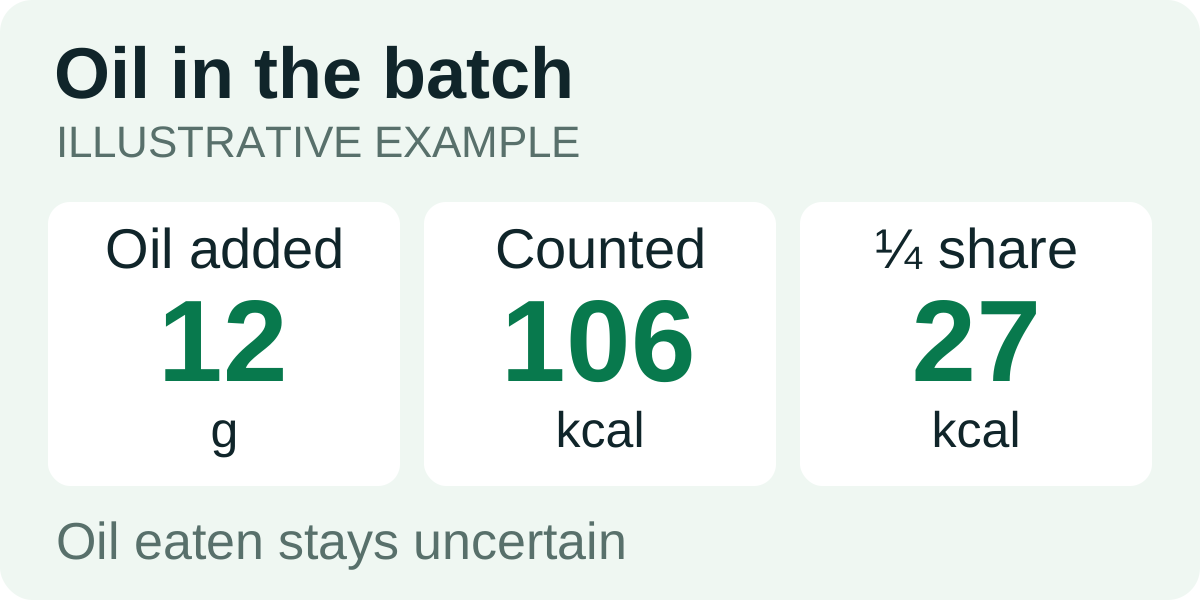
How to log cooking oil when some stays in the pan
Measure what leaves the bottle, separate that from what you know was eaten, and avoid treating all leftover pan liquid as pure oil.
Read the guide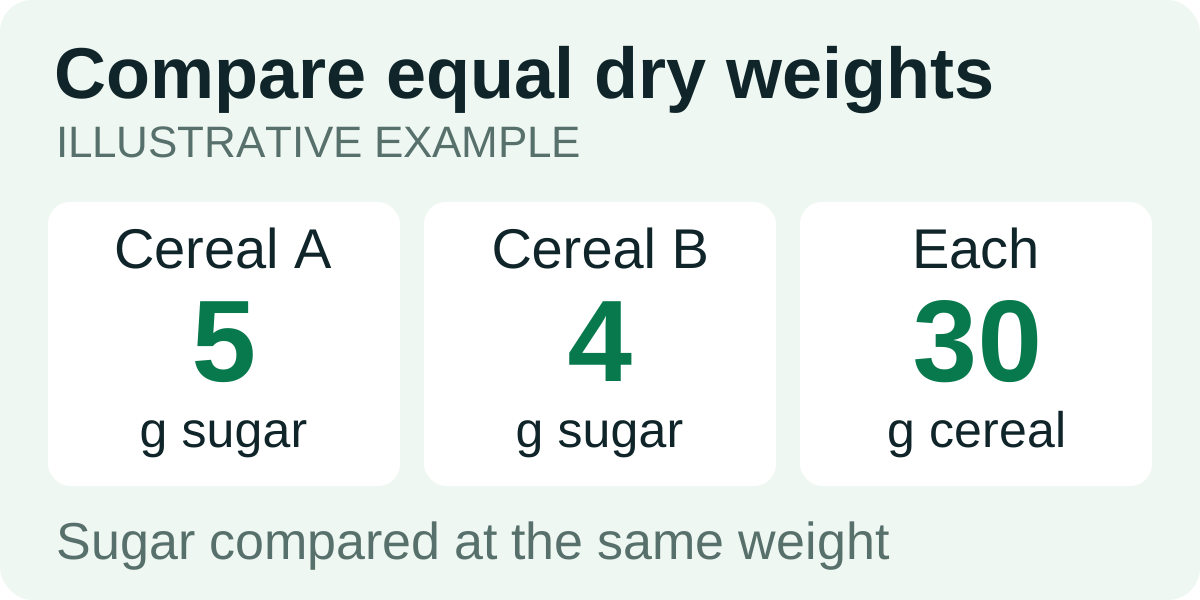
How to compare cereal sugar when serving sizes differ
Compare the same dry weight before comparing cereal sugar. A worked label example shows why fewer grams per serving can hide a larger amount per gram.
Read the guide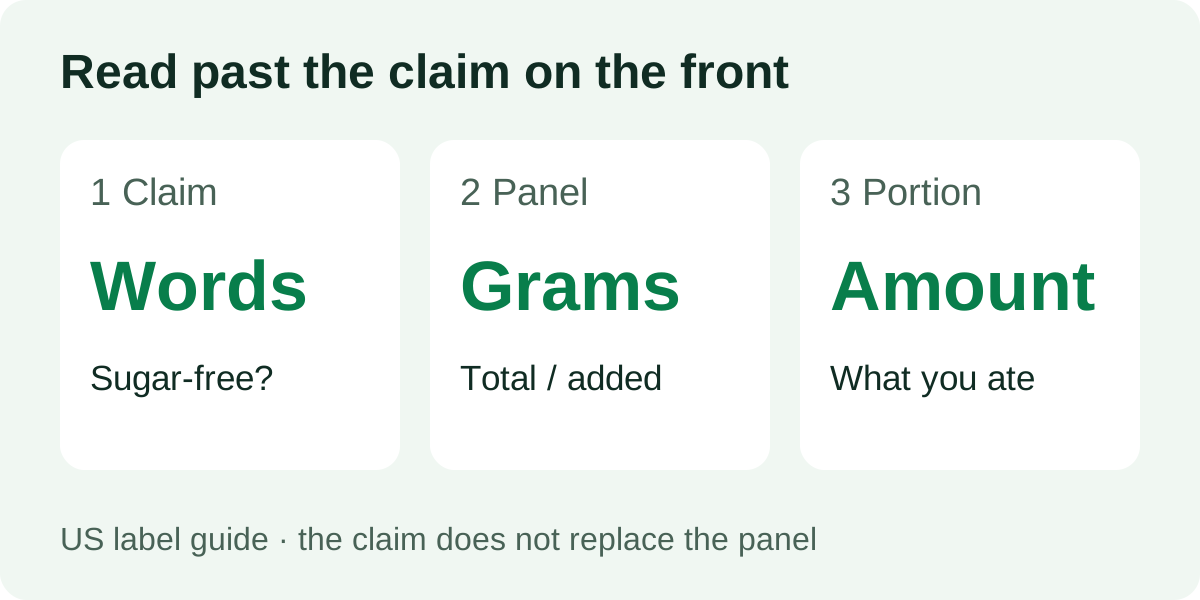
No added sugar, sugar-free and unsweetened: compare the labels
Read the front claim, then check total sugar, added sugar and serving size using three documented US product examples.
Read the guide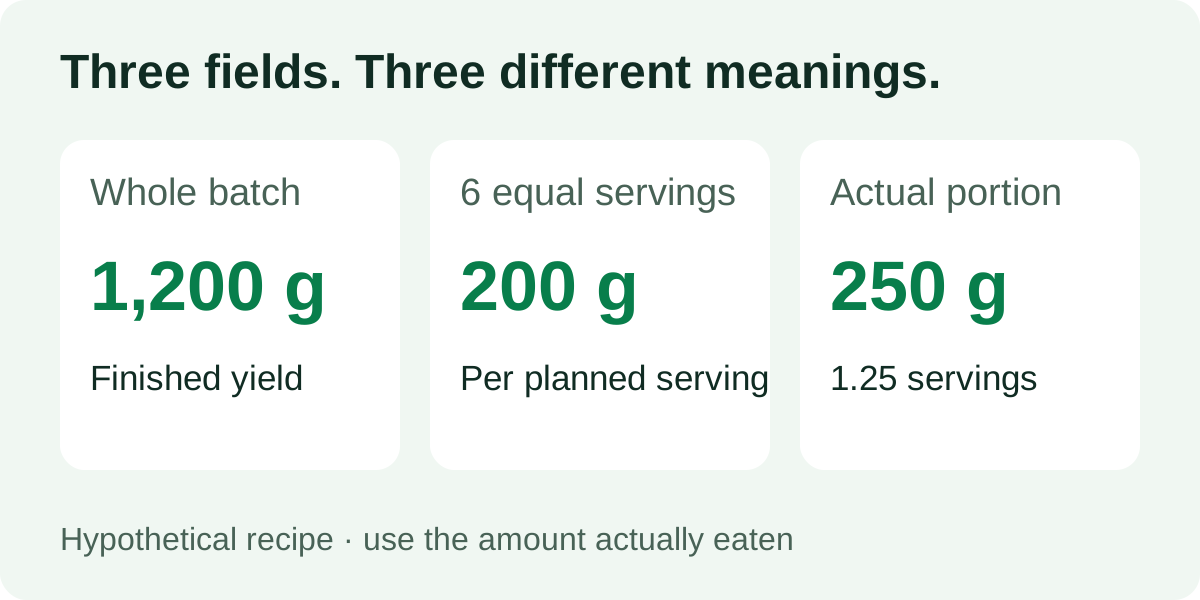
Recipe yield vs. servings: what number belongs in your diary?
Tell a recipe’s finished amount, serving count and portion weight apart before calculating what you actually ate.
Read the guide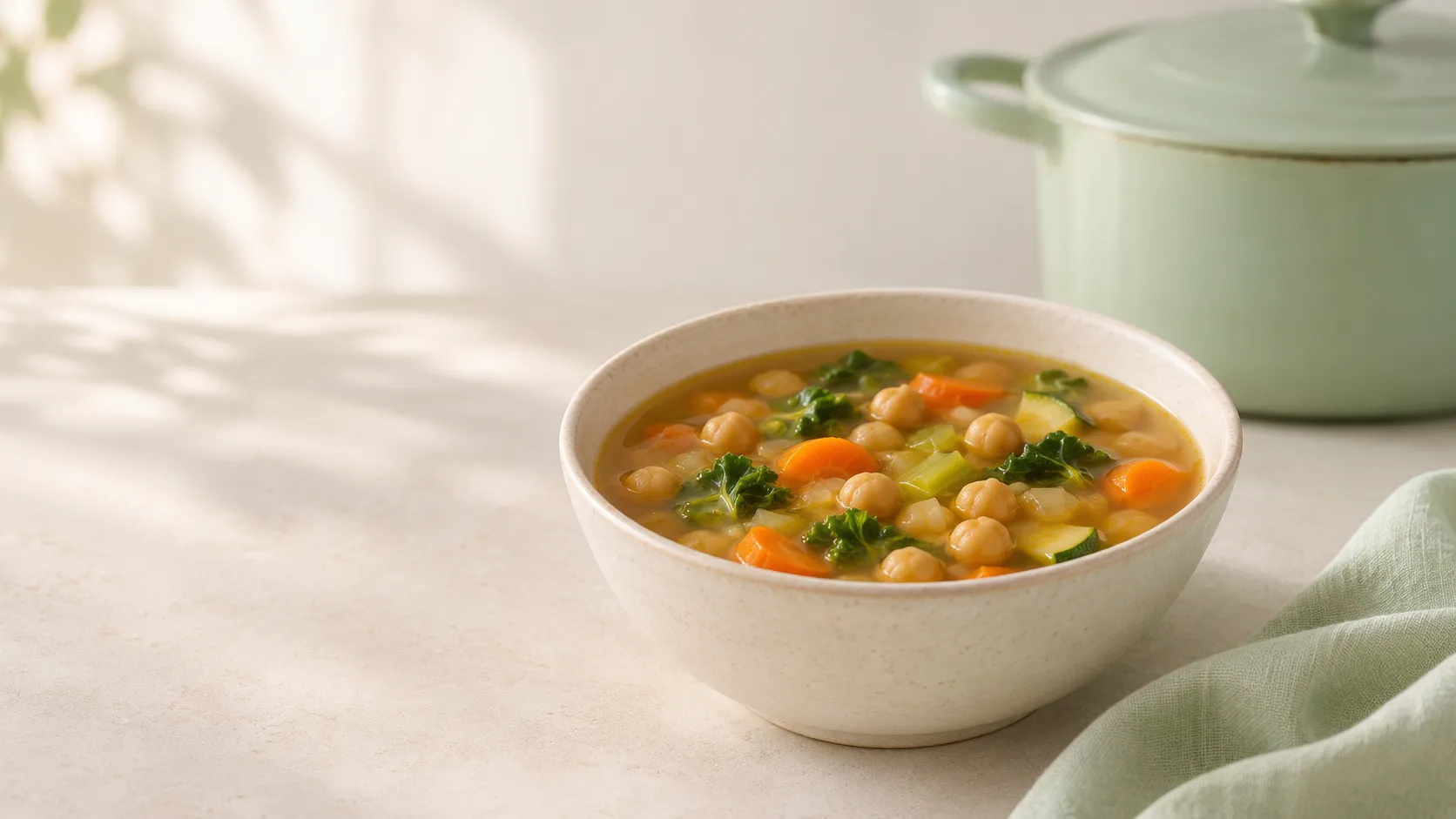
How to calculate calories in a pot of homemade soup
Calculate a pot and the bowl you ate, with a worked example that separates soup weight, added water and uneven solids.
Read the guide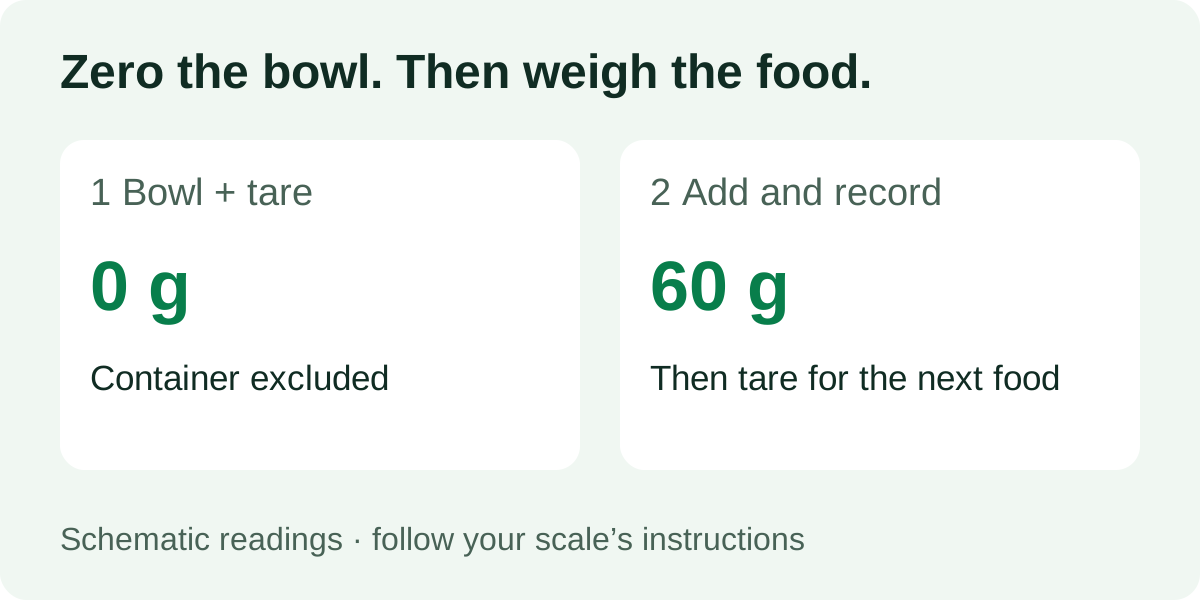
How to use a food scale for calorie logging
Tare a bowl, record one ingredient at a time, and turn the food weight into calories without counting the container.
Read the guide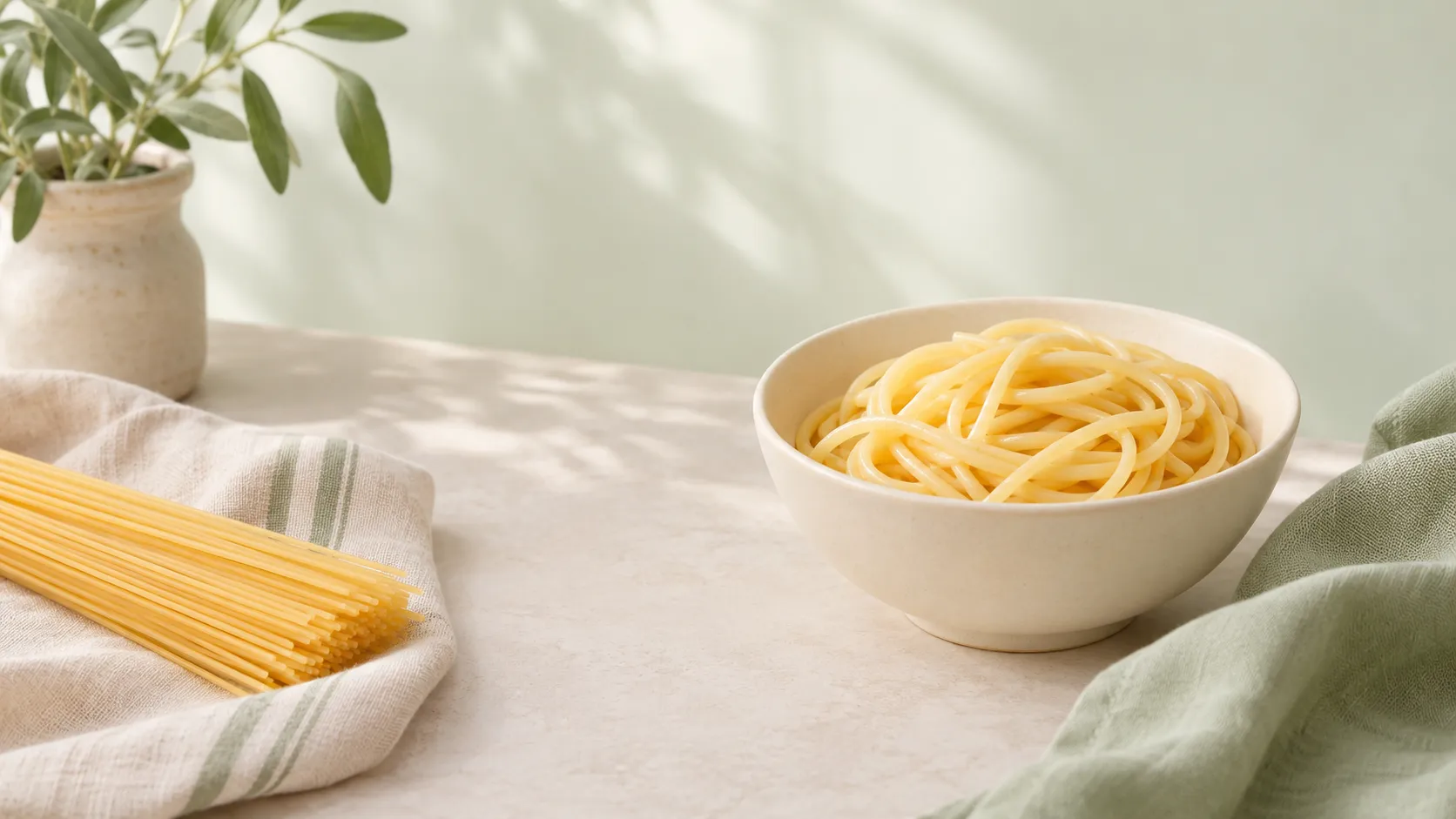
How to count dry pasta calories in a cooked batch
Match dry or cooked nutrition data to your weighing step, then use your own cooked yield to calculate the pasta on your plate.
Read the guide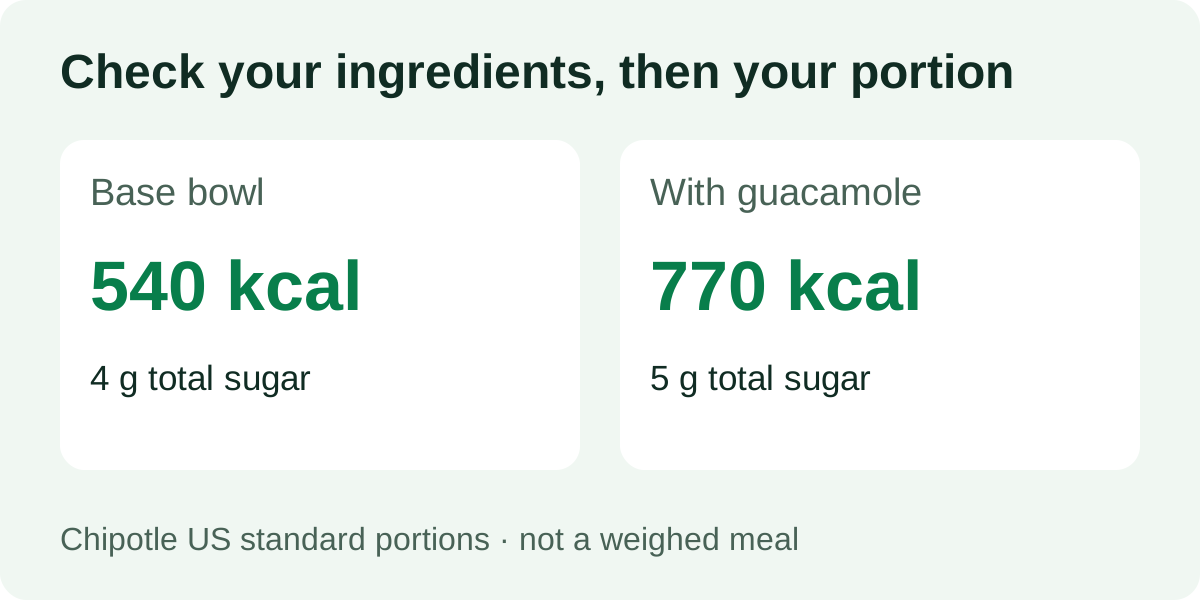
How to log a custom Chipotle burrito bowl
Build your exact order, find calories and total sugar, and account for the part you ate, including toppings eaten unevenly.
Read the guide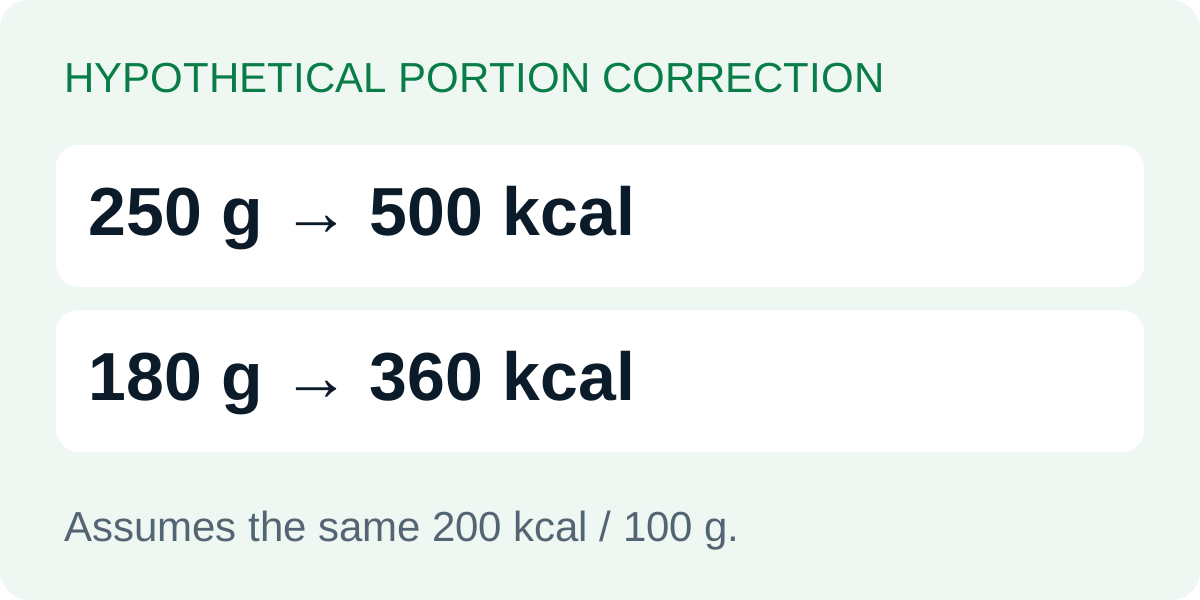
How to review an AI food estimate before saving
Check food identity, preparation, portion and nutrient basis before saving an estimate. Use a worked correction example and avoid treating unknowns as zero.
Read the guide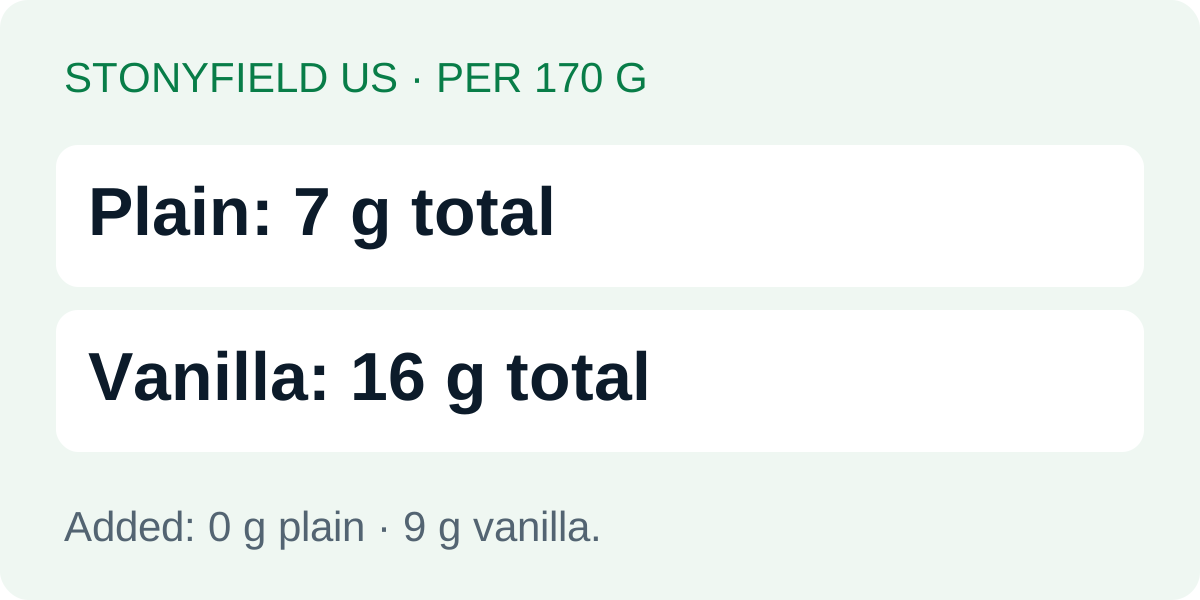
How to compare sugar in plain and flavored yogurt
Compare two actual Stonyfield US labels at the same mass. Calculate a 150 g portion and keep total sugar separate from the included added sugar.
Read the guide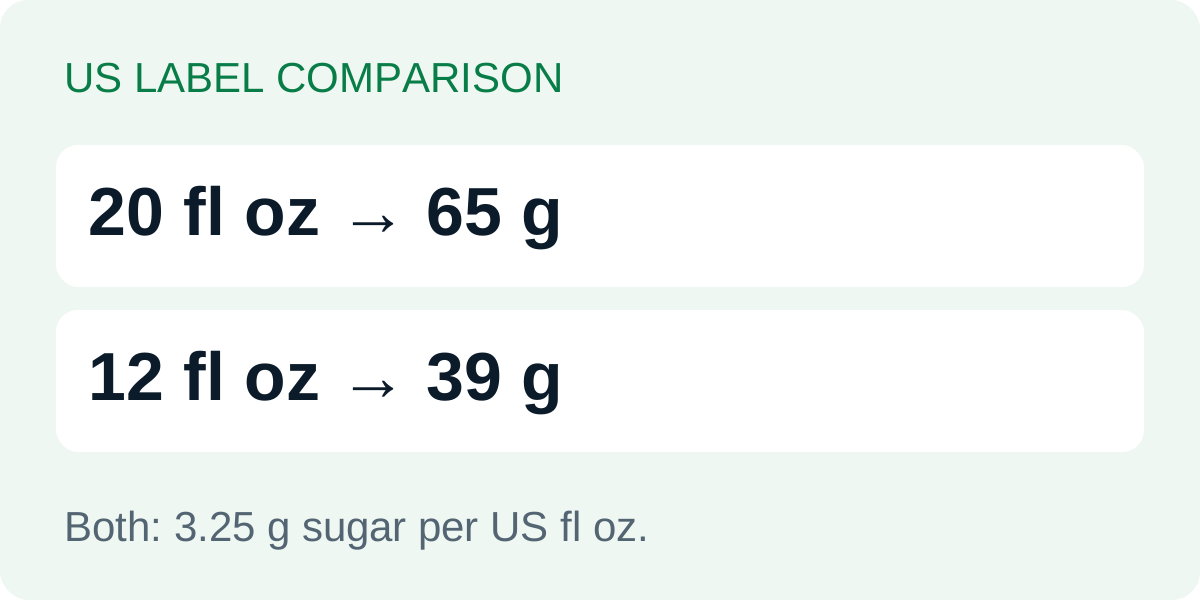
How to compare sugar in drinks of different sizes
Compare sugar at an equal volume, then calculate the amount you drank. Work through two named US Coca-Cola labels without mixing total and added sugar.
Read the guide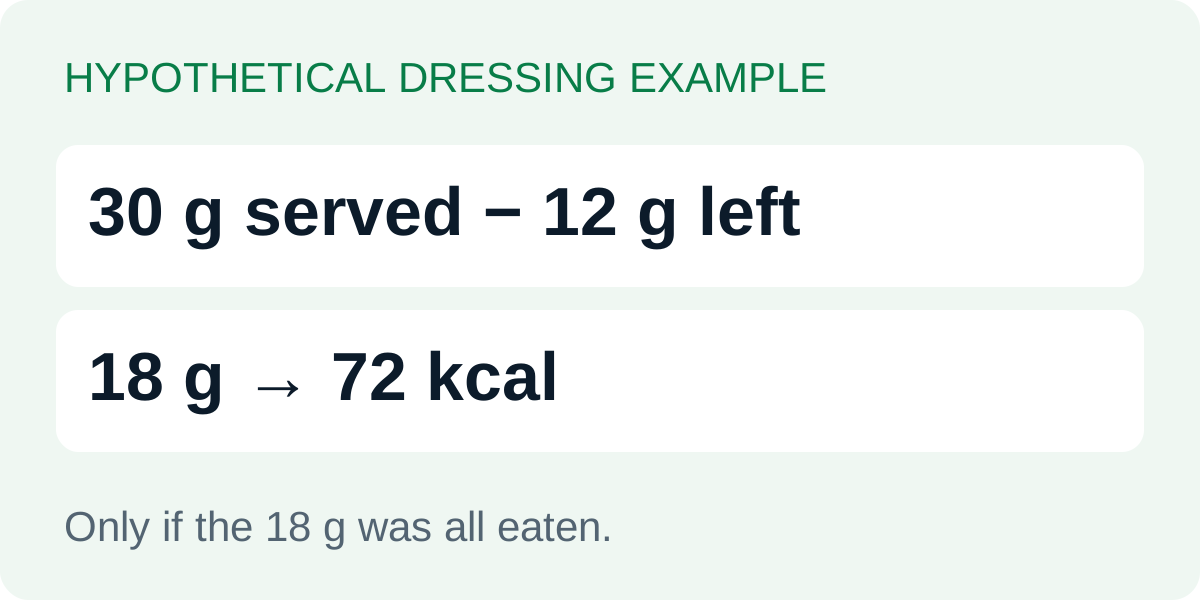
How to count sauces, dressings and toppings
Distinguish dressing dispensed from dressing eaten. Use a transparent leftover calculation, match label units and avoid counting included sauces twice.
Read the guide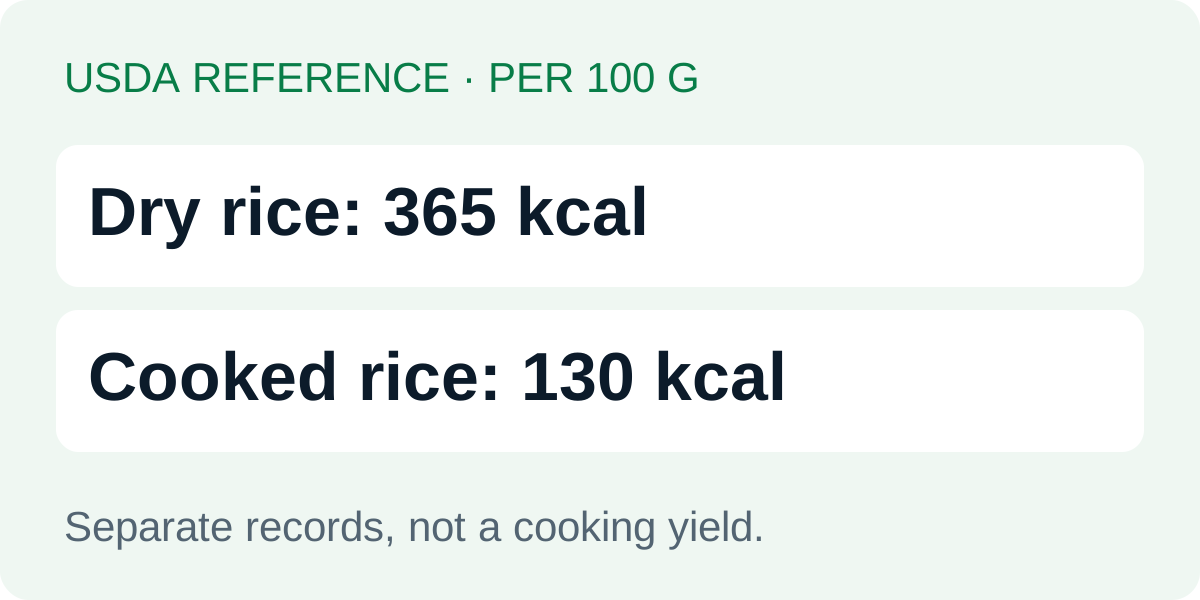
Raw vs. cooked food weights: which entry should you use?
Match the weighed food state to its nutrition record. Compare two USDA rice entries and try the finished-batch portion calculation.
Read the guide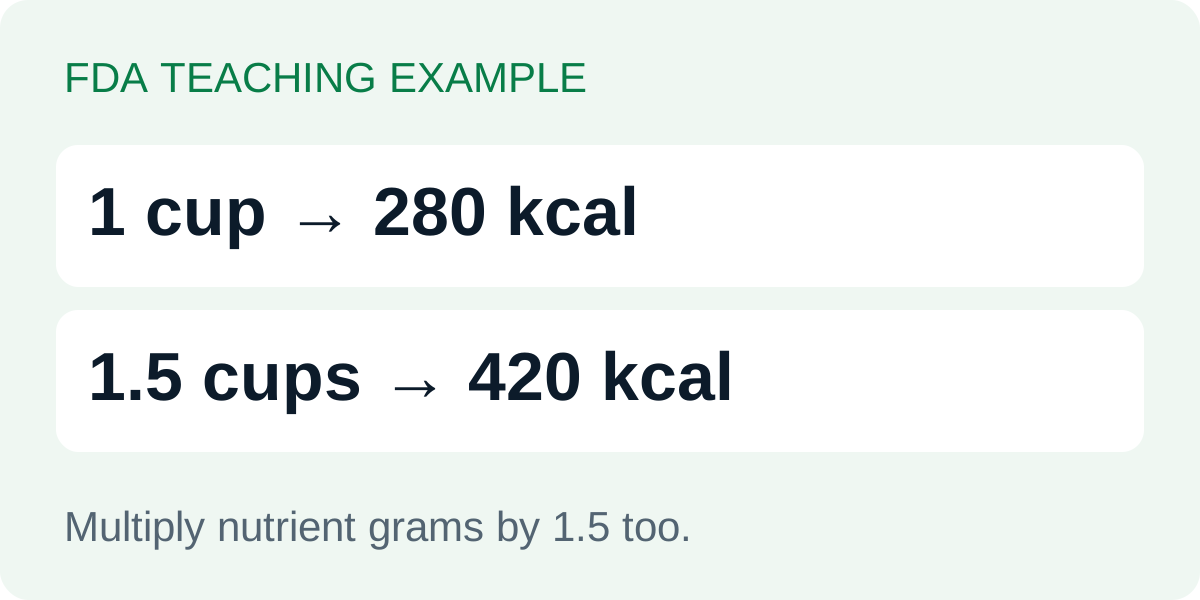
How to read a US Nutrition Facts label for food logging
Choose the right label column, scale calories and nutrient grams to what you ate, and check a barcode result without double-counting sugar.
Read the guide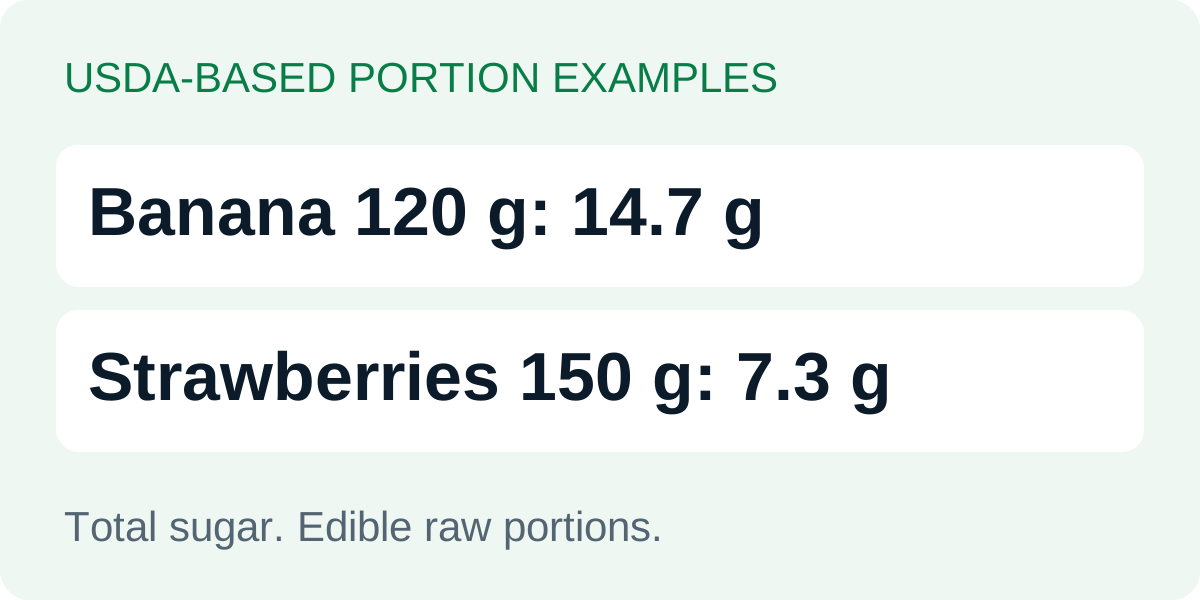
How to log fruit without treating total sugar as added sugar
Use exact USDA raw banana and strawberry records with edible portion weights. Follow the sugar calculation and handle missing added-sugar data correctly.
Read the guide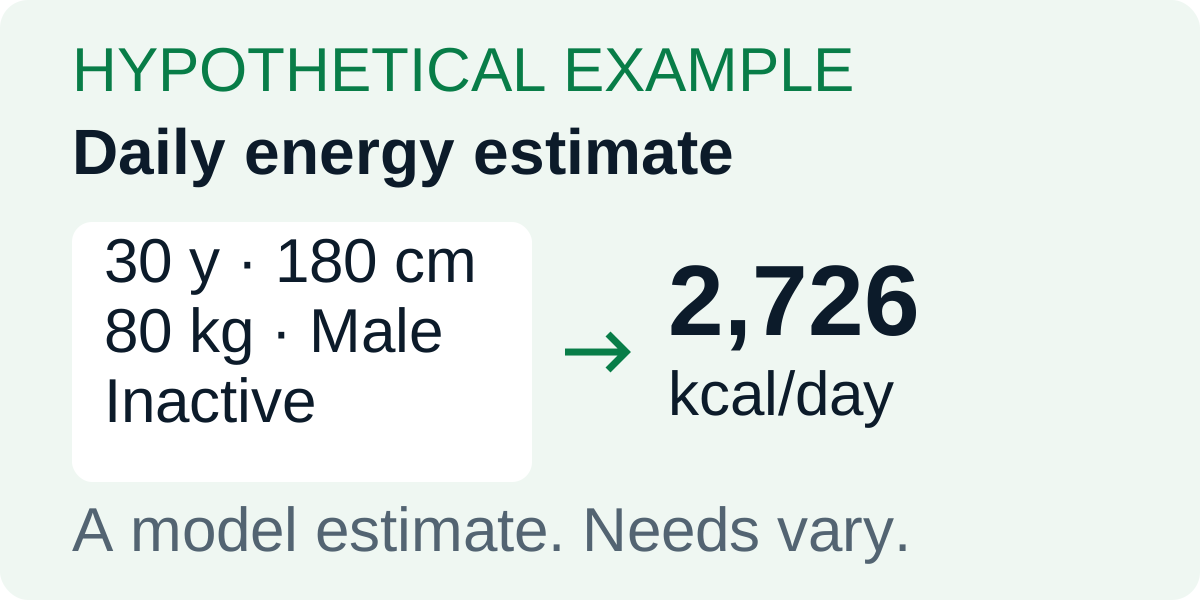
How many calories do I need per day?
Understand daily calorie estimates, check a worked TDEE example, and separate energy expenditure from an intake plan and your food diary.
Read the guide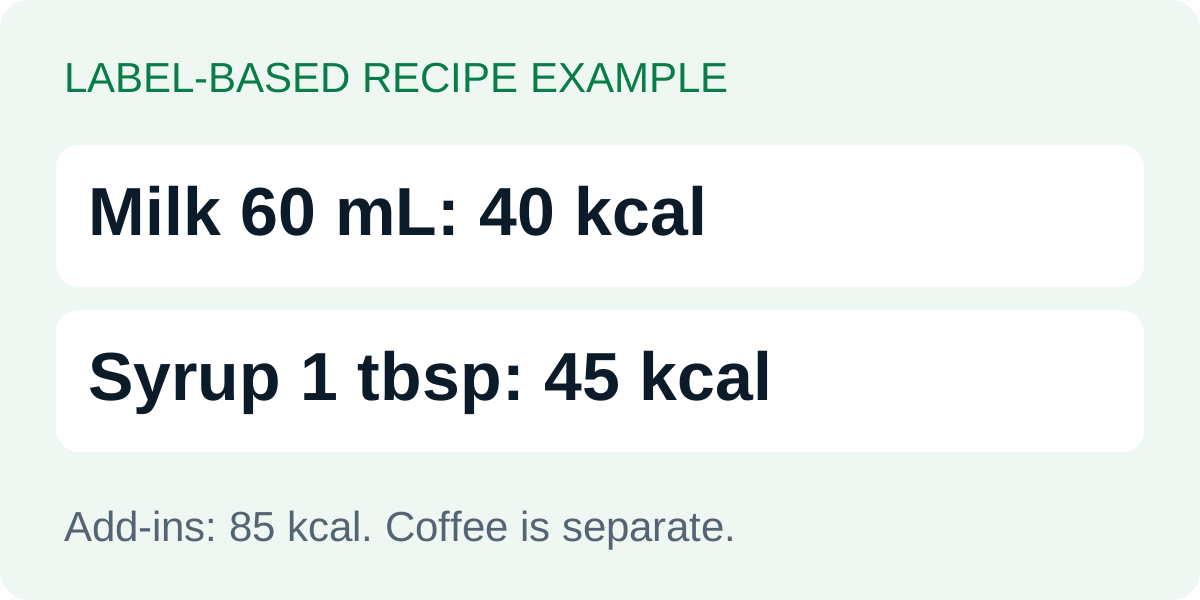
How to log milk, syrup and sugar in coffee
Calculate milk and syrup from two actual US product labels. See why pump counts, mug size and an add-ins subtotal need separate checks.
Read the guide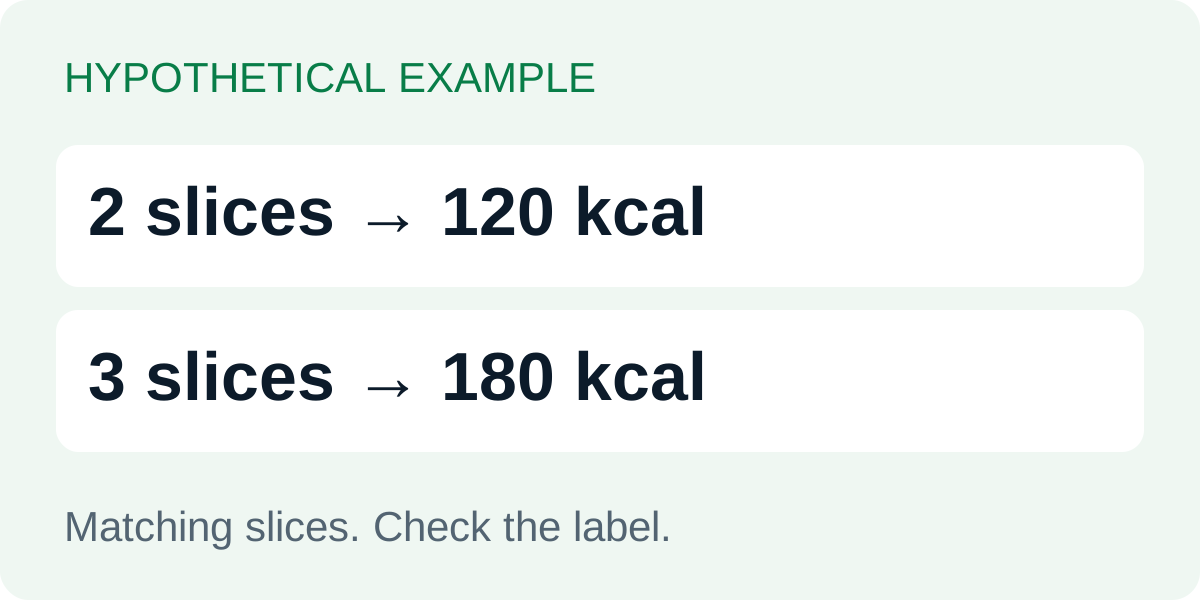
How to count calories without weighing food
Use package amounts, matching pieces and household measures to estimate a meal. See what each method can establish and when a photo remains a guess.
Read the guide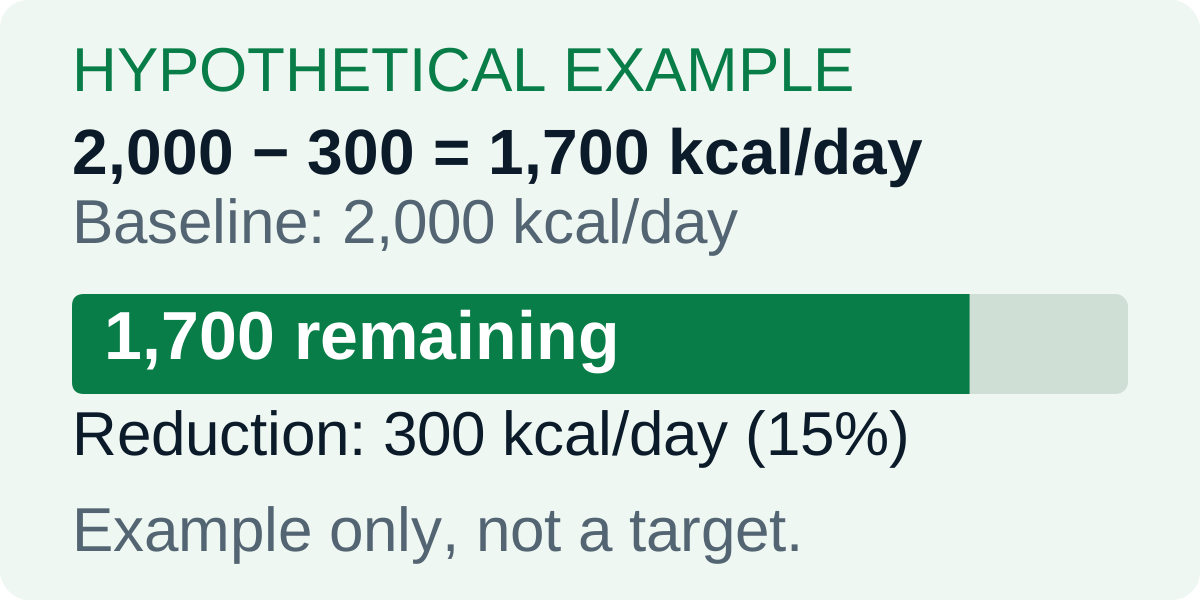
How a calorie deficit calculator works
Follow a calorie deficit calculation, compare kcal with percent, and understand the maintenance estimate, output limits and food diary connection.
Read the guide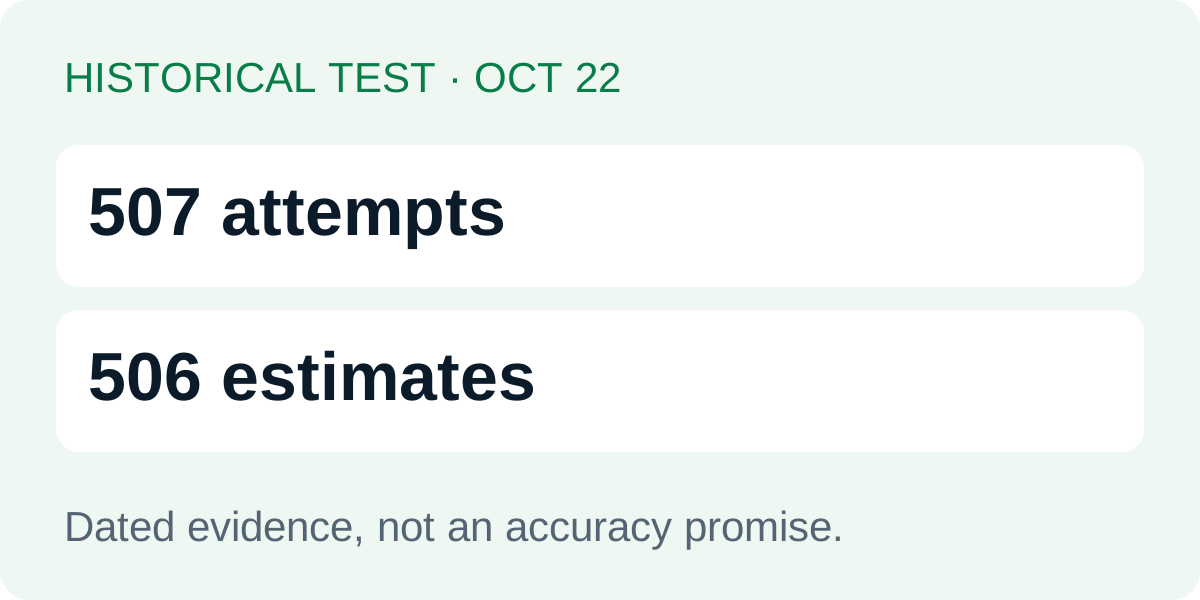
Is AI calorie counting accurate? A dated 507-dish test
Read a reproducible October 22 photo test: 507 attempts, 506 estimates, calorie errors and the limits of applying a cafeteria dataset to your meals.
Read the guide
Total sugar vs. added sugar: read the two numbers together
Understand total and added sugar on a US label, avoid counting added sugar twice and work out the sugar in the portion you ate.
Read the guide
How to track meals you eat every day
Keep a useful record of meals you repeat, check changes in portions and ingredients, and reuse saved foods without counting a meal twice.
Read the guideNo guides found
Try a different word or choose another topic.