 Nourmio
How to log canned food using drained weight
Check whether a canned-food label describes drained solids or the contents as sold. Use a real tuna label to calculate a full or partial serving.
Read the serving-size wording before choosing a weight. If it says drained, weigh the drained food you eat and compare it with the drained grams on that label. The can's net weight can include packing liquid, so it is not interchangeable with the label's drained serving weight. Foods eaten with their liquid need a matching basis too.
Find the word that explains the numbers
Look beside the serving size for wording such as “1 can drained.” The weight printed there describes the food behind that nutrition panel. A larger net quantity elsewhere on the package may describe the food plus its liquid.
US nutrition-label rules include a drained-solids basis for foods packed in liquid that is not customarily consumed. That does not make every canned product a drained-food entry. Soup, fruit with syrup that you eat, and a drained can of tuna are different cases. Use the wording on your own package.
On the StarKist Foodservice page, the 5 oz can of Chunk Light Tuna in Water lists 90 kcal per drained can (113 g). The same page also covers a larger can. Match the package size before using either panel.
A second manufacturer’s panel shows why the column heading matters. Del Monte’s French Style Green Beans with Onions, Red Peppers, and Garlic lists 20 kcal under Undrained (1/2 cup) and 15 kcal under Drained (about 1/3 cup). Those are different preparation and portion descriptions. The online panel also repeats a 1/2-cup serving-size line below the drained heading. It does not give a clear drained gram amount for a gram-based calculation here. Check your package or ask the manufacturer rather than assigning the undrained portion’s weight to the drained column.
Scale a drained serving using drained grams
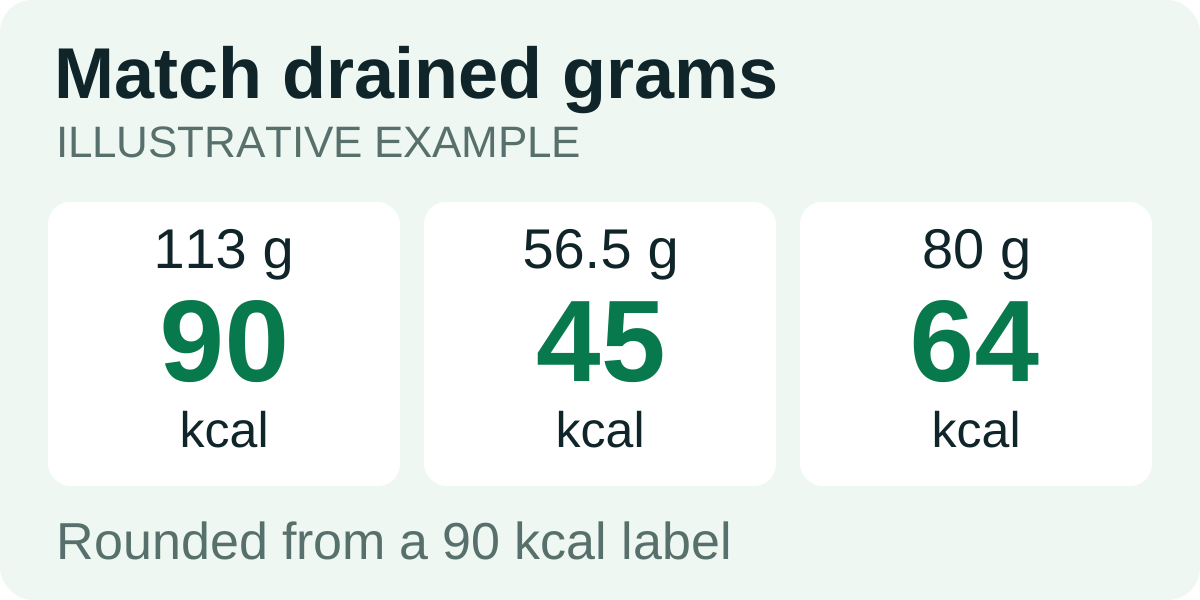
The following portion weights are illustrative, using that label’s 90 kcal per 113 g. We did not drain or weigh a can for this article.
| Drained amount eaten | Calculation from the reviewed label | Estimated calories |
|---|---|---|
| One label reference serving, 113 g | 90 × 113 ÷ 113 | 90 kcal |
| Half the reference weight, 56.5 g | 90 × 56.5 ÷ 113 | 45 kcal |
| An illustrative 80 g portion | 90 × 80 ÷ 113 | About 64 kcal |
For your own can, tare the empty bowl before weighing the drained food. Include only the portion you will eat. Scale from the label you have, because brands and packing media can differ. Label rounding and differences in draining mean the result is still an estimate.
For the entire drained can, use the label’s per-can value when it lists one. For part of the can, divide the grams you ate by the drained serving grams, then multiply by the calories for that serving. If the label only gives undrained values, find a matching drained reference before using this calculation.
Treat oil, brine and added ingredients separately
A water-packed reference is not a substitute for oil-packed tuna. Nor should you assume draining removes every bit of packing oil. Use the product’s own drained-food information when available and follow its stated basis.
If you deliberately add some packing liquid to a recipe but only have a drained-solids panel, that panel does not establish the nutrition of the extra liquid. Look for manufacturer information covering what you actually use. Keep an unresolved amount as unknown rather than declaring it calorie-free.
Rinsing is another preparation change. A drained label does not by itself quantify what rinsing removes. This article’s calculation does not measure a sodium reduction or a change in nutrients after rinsing.
Once you mix drained tuna with mayonnaise or other ingredients, calculate the combined recipe. Count the tuna once using the drained amount, then add the measured extras. The recipe nutrition calculator can allocate a share of the finished mixture.
Check the saved entry’s serving basis
Name the entry clearly, for example “water-packed tuna, drained, 80 g.” If a barcode result uses a whole can or a different gram amount, adjust the portion before saving it. An apparently correct product name can still have the wrong serving basis.
The Nutrition Facts guide covers scaling label values. Keep the package label or a photo of it for reference. In Nourmio, check the portion’s calories and total sugar before saving it in your diary.