 Nourmio
How to count calories in marinade when you discard some
Use the label to count the clean finishing sauce you eat. See what the amount poured into the raw bowl can tell you about calories and total sugar.
Measure the sauce you set aside for serving before the rest touches raw meat. Count the clean sauce you eat from the label. For the raw bowl, the amount you poured gives an upper estimate. The leftover liquid cannot tell you how much of its calories or sugar reached your plate.
Measure the clean finish and the working marinade
Pour the sauce for serving into a clean cup before you add raw meat to the working bowl. The USDA grilling guidance also recommends setting the finishing sauce aside first. Measure each pour so you can record it separately.
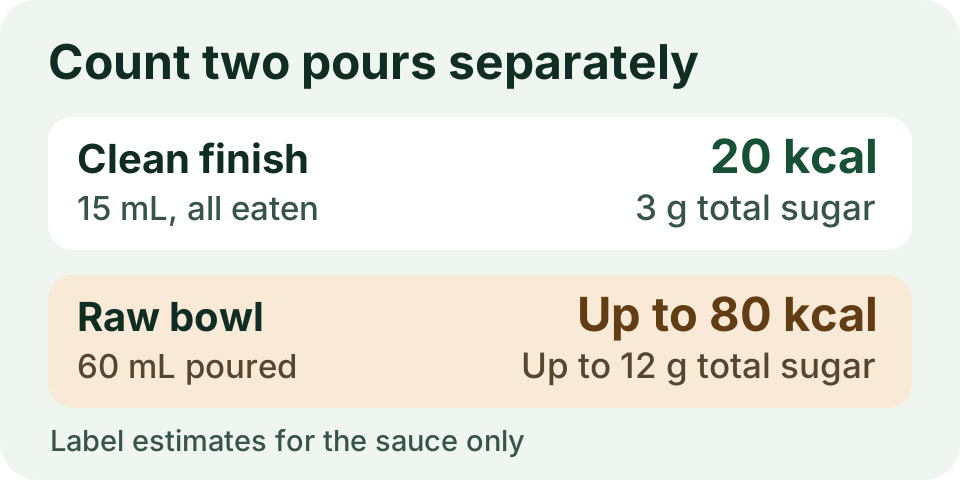
The US label for Kikkoman Teriyaki Marinade & Sauce, 15 fl oz lists 20 kcal and 3 g total sugar per 15 mL. Say you pour one serving into a clean cup and four servings into the bowl. Later, you discard the marinade left in the bowl and eat all the clean sauce on the cooked food.
| What you poured | Amount | What the label gives you |
|---|---|---|
| Clean finish, all eaten | 15 mL | 20 kcal and 3 g total sugar |
| Working marinade | 60 mL | Up to 80 kcal and 12 g total sugar from this pour |
For a conservative batch estimate, add the whole working pour to the clean finish. That’s up to 100 kcal and 15 g total sugar from the sauce, based on the printed numbers. The amount from the raw bowl that you actually ate is unknown.
Keep the leftover liquid out of the subtraction
The leftover liquid can include juices from the meat. With a sauce that separates, the portion you pour away can also have a different mix of oil and liquid. A measuring cup tells you how much liquid remains. It cannot tell you how much original sauce or sugar is in it.
Research on nutrient retention accounts for the weight and nutrient composition of discarded material when estimating losses. The example here uses the two amounts you can measure at home. It does not assume a percentage absorbed.
Put the sauce on the right line in your diary
If all the clean finish goes on your plate, count that amount on your plate. If you spread it across the batch, use the amount that went on your portion when you know it. See how to log sauces and toppings for measuring what you serve.
When adding up a recipe from ingredients, keep the sauce estimate separate from the meat and any oil you add during cooking. If you use an entry for the finished marinated food, check which sauce the entry includes before adding a separate line. You can enter the label-based numbers manually in Nourmio and keep the estimate with your meal.