 Nourmio
How to count breading calories when some coating is left over
Use the dry breadcrumbs you poured to estimate breading calories. See why flour or panko left in a wet bowl is hard to subtract.
Weigh the dry coating before it goes into the working dish. If some stays in a separate clean bowl, subtract that untouched amount. The dry weight you poured gives an upper estimate for the crumb calories. The wet leftovers cannot tell you how much dry coating stuck to the food.
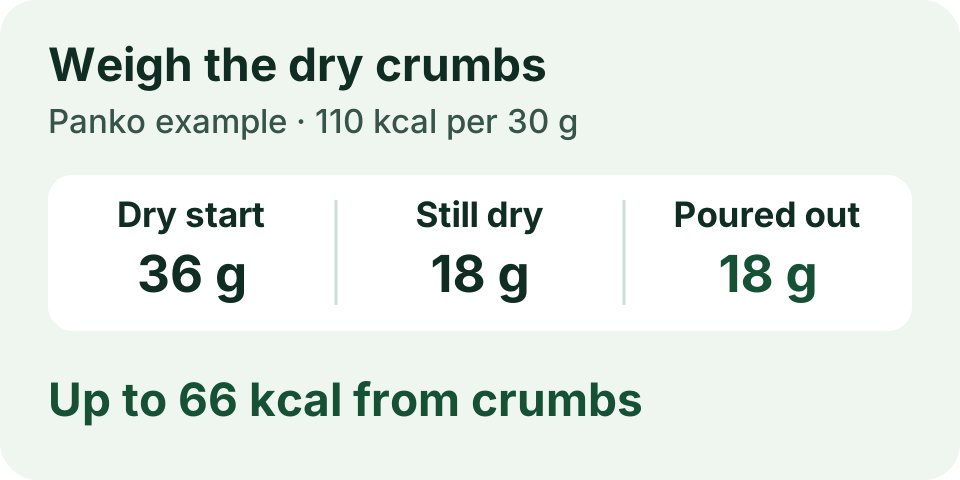
Weigh the dry crumbs that go into the dish
Start with dry crumbs in a clean bowl. Pour small amounts into a separate dish as you need them. Keep raw chicken, egg wash and the utensils that touch them away from the clean supply.
Suppose you start with 36 g of dry panko and 18 g remain in the clean bowl. You poured 18 g into the work dish. The Kikkoman panko label lists 110 kcal per 30 g, so the amount you poured comes to 66 kcal. That is an upper estimate for the dry crumbs in the batch. Some may stay in the work dish or fall off later.
A wet leftover can contain egg and crumbs
Imagine that 9 g remains in the work dish after you coat the chicken. Here are two ways it could reach the same weight.
| Possible 9 g remainder | Dry crumbs left | Dry crumbs that left the dish |
|---|---|---|
| 9 g dry crumbs | 9 g | 18 − 9 = 9 g |
| 5 g crumbs and 4 g egg wash | 5 g | 18 − 5 = 13 g |
These are example mixtures. The scale cannot tell them apart. Weighing the chicken before and after coating also gives a combined weight that can include flour, egg and crumbs.
Add the rest of the recipe separately
If you calculate the meal from ingredients, keep the flour, egg and oil used in the pan separate from the crumb estimate. Use the same approach as for a homemade recipe and keep any uncertain amount visible.
If you use the label on an already breaded product, check its preparation and portion. The labeled breaded item already includes its coating. Use that figure once and add only the extras you used. You can enter the resulting estimate manually in Nourmio.